
Foshan is one of China’s most useful sourcing bases for architectural finishes and home-related manufacturing. The advantage is not one giant market with every product under one roof. It is the density of factories, showrooms, processors, accessory suppliers, packaging vendors and logistics operators that can turn a bill of quantities into a coordinated shipment.
That density also creates confusion. A polished showroom may represent its own factory, several partner factories or a trading company. Two brands may use the same production line while applying different decoration, grading, packaging and after-sales terms. The lowest tile or sanitary-ware price can become the most expensive option after breakage, shade variation, missing accessories and destination handling are included.
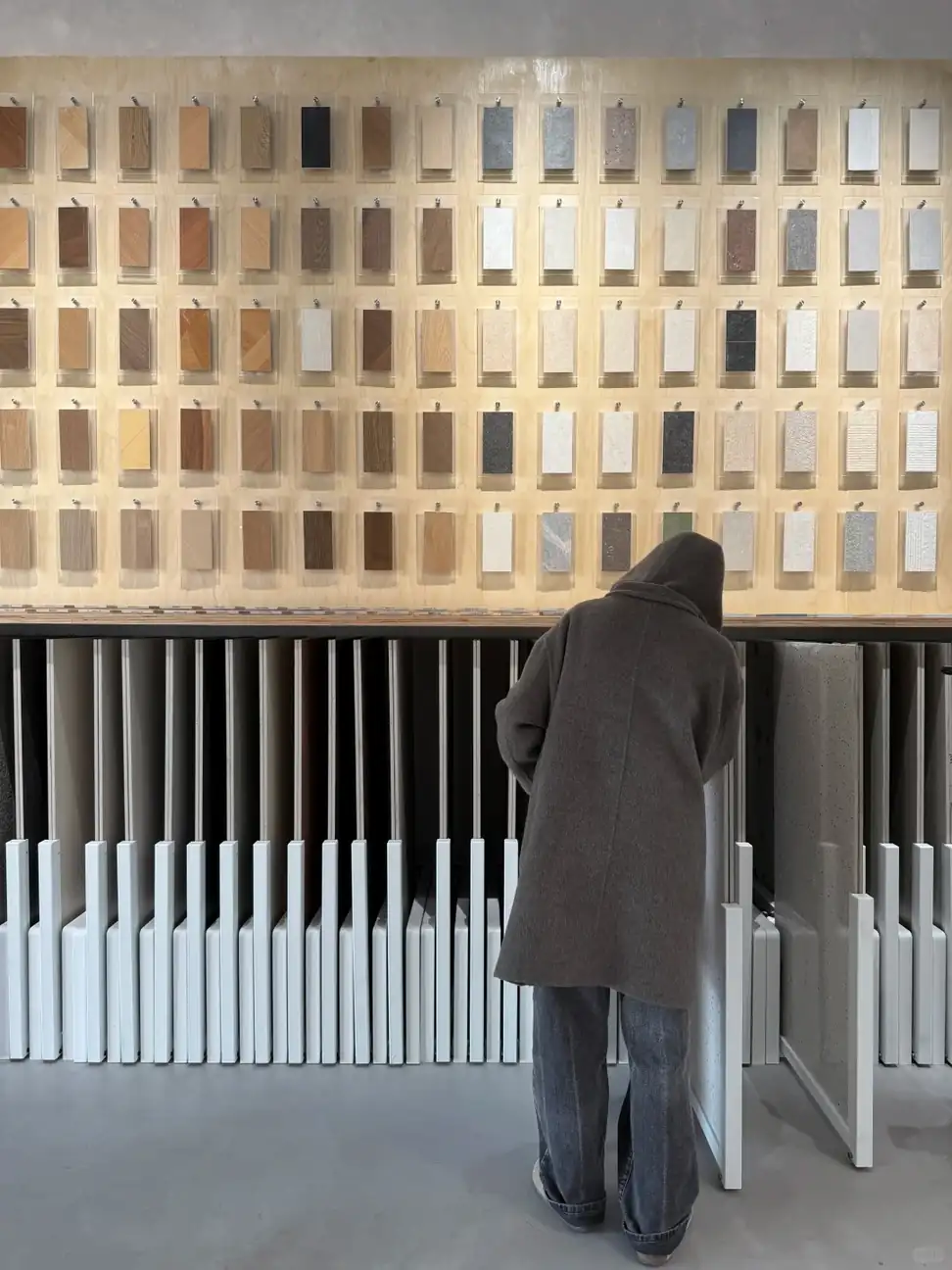
1. Why Foshan is a sourcing system—not a single market
Foshan’s strength comes from a broad “pan-home” manufacturing ecosystem. Official local industry material identifies home appliances, furniture, architectural ceramics, sanitary ware and aluminum profiles among the city’s established sectors. The surrounding supply chain adds stone processing, stainless hardware, doors and windows, coatings, printing, cartons, foam protection, pallets and specialist machinery.
This matters because a building-material order is rarely one product. A hotel, villa, apartment development or retail fit-out might combine floor tile, wall tile, sanitary ware, faucets, shower enclosures, vanities, doors, lighting, loose furniture and replacement parts. Buying each category independently can create incompatible finishes, fragmented packing lists and multiple partially filled shipments. Buying through a coordinated Foshan plan makes comparison, mock-up review and consolidation more manageable.
Foshan is unquestionably a major manufacturing base, but percentages repeated in older articles are often undated and difficult to verify. Your decision should depend on the current supplier, product specification, tested performance, production site and landed cost—not a citywide marketing statistic.
2. Match each product to the right industrial cluster
A sourcing trip becomes inefficient when the itinerary follows famous market names instead of product and process. Start with a category map, then group appointments by location and decision type.
| Product family | What Foshan offers | What the buyer must verify |
|---|---|---|
| Tiles, slabs and sintered stone | Large showroom selection, ceramic manufacturers, surface processors, cutting and edge-finishing partners | Actual production base, body and surface specification, shade/caliber control, grading, breakage allowance and export crate |
| Sanitary ware and bathroom | Ceramic fixtures, vanities, shower enclosures, faucets, drains and bathroom hardware | Which products are self-manufactured, water fittings, cartridge brand, glaze and firing quality, leakage tests and spare parts |
| Furniture and interior packages | Residential, hospitality and commercial furniture, customization and accessory networks | Frame material, foam density, fabric lot, hardware, dimensions, fire requirements, knock-down structure and loading protection |
| Aluminum, doors and windows | Profile extrusion, surface finishing, system doors/windows and hardware integration | Alloy and temper, wall thickness, coating or anodizing, thermal-break system, glass build-up, hardware and performance tests |
| Hardware and supporting materials | Stainless fittings, hinges, slides, handles, drains, fasteners and project accessories | Material grade, plating thickness, salt-spray requirement, load cycles, dimensional compatibility and replacement availability |
A supplier located outside central Foshan is not automatically less credible. Modern production may sit in lower-cost industrial areas while sales remain in a city showroom. The important question is whether the showroom’s quotation, legal entity, factory and payment beneficiary form a traceable commercial chain.
3. Showroom, trading company or manufacturer?
The word “factory” is used loosely in the building-material trade. A showroom can be a factory-owned display center, an authorized distributor, an export company related to the factory, or an independent trader assembling products from several plants. Each model can work. The risk is an undisclosed structure that prevents you from knowing who controls quality, who holds the warranty and who receives your money.
Five questions that penetrate the showroom
- What is the exact Chinese legal name on the contract and business licence?
- Which production address makes this specific SKU—not merely a similar product?
- Which processes are completed in-house and which are outsourced?
- Is the bank beneficiary the contracted entity or a documented affiliate?
- Who owns the mold, artwork, technical file and warranty obligation?
One production group may supply several brands or use OEM arrangements. That does not make all products identical. Surface design, raw material, firing curve, grading tolerance, hardware, inspection level and packaging can change by contract. Treat “same factory” as a lead for technical comparison—not proof that a lower-priced brand has the same delivered quality.
Use desktop supplier verification to connect the licence, legal status and payment identity. For a high-value project, an on-site factory audit should establish which machinery and processes are actually controlled at the named site.
4. Lock the specification before negotiating price
The phrase “good quality” has no inspection value. Before collecting quotations, convert the design intent into measurable acceptance criteria. Otherwise one supplier prices a premium construction while another prices a visually similar but technically weaker alternative.
Drawing, SKU, dimensions, approved finish, color reference and intended application.
Relevant strength, absorption, slip, corrosion, cycle, load, leakage or safety requirement.
Shade range, grain direction, gloss, pinholes, scratches, edge chips and approved defect examples.
Accessories, installation substrate, connectors, spare parts and tolerances between components.
Pieces per carton, carton strength, foam or corner protection, pallet/crate and shipping marks.
Required test standard, labeling, documentation and importer obligations for the target market.
Approve a signed Golden Sample or project mock-up before mass production. For natural-looking tile, slabs, wood grain and upholstery, one small sample cannot represent the entire acceptable visual range. Define the approved range and obtain multiple pieces from the intended production lot.
For faucets, valves and other potable-water-contact components, do not accept a generic “export quality” claim. Establish the destination requirement before sourcing—such as applicable North American plumbing/listing requirements and NSF/ANSI/CAN 61 or 372 evidence, or the relevant UK/EU market approval route such as WRAS/Regulation 4, ACS or another specified scheme. Verify the exact model and material scope on the certificate; a supplier logo or unrelated family certificate is not enough.
5. Category-specific buying checks
Tiles, slabs and sintered stone
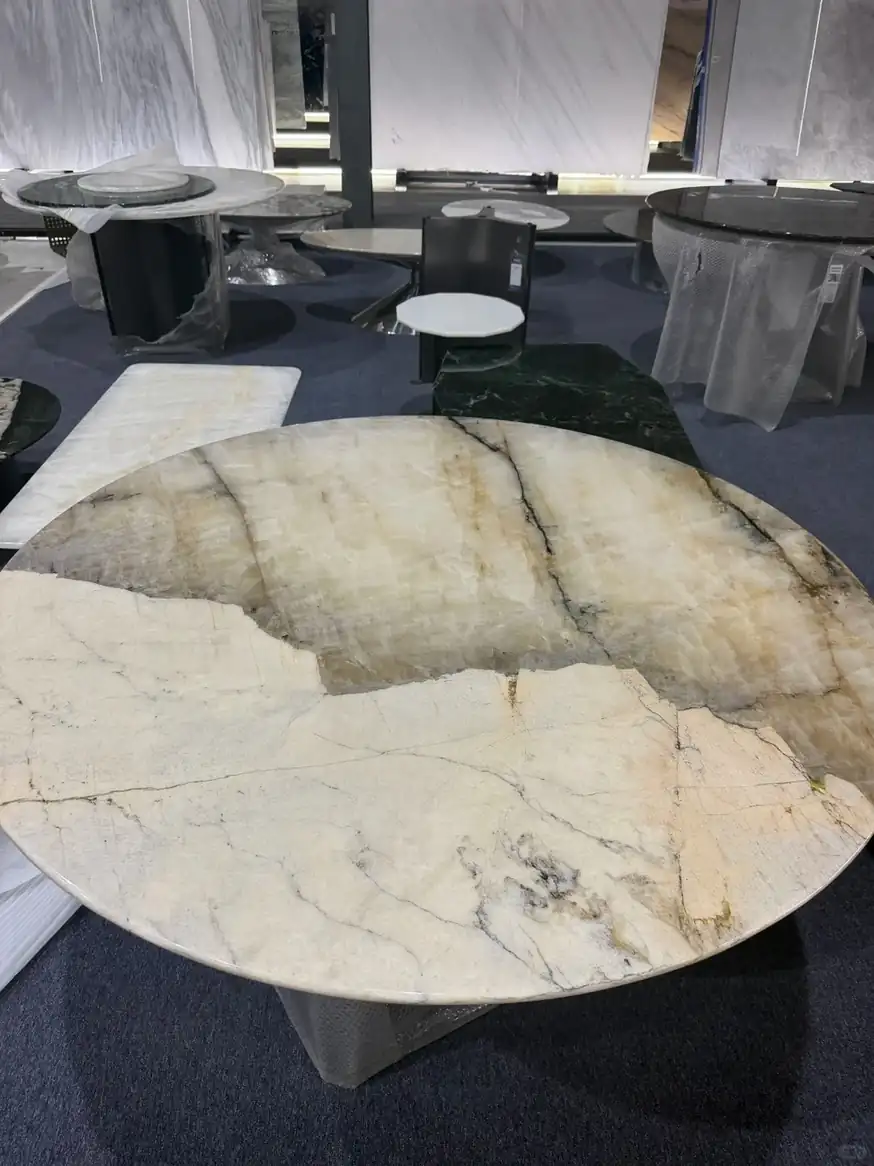
Record nominal and actual size, thickness, edge treatment, water absorption classification, surface finish, gloss range, flatness and intended wall/floor application. For wet areas, define the required slip-performance evidence. Confirm shade and caliber codes by production lot; mixing lots can create visible variation after installation. Large slabs need a packing plan built around handling equipment, crate design and destination unloading—not only factory price per square meter.
Sanitary ware, faucets and shower products
Separate ceramic bodies from fittings and concealed components. Check glaze coverage, pinholes, cracks, warpage, trapway and mounting interfaces. Define leakage and flushing tests where relevant. For faucets and valves, lock the body material, cartridge, plating or finish, hose specification and pressure/leakage test. Request spare consumables because a low-cost proprietary cartridge that cannot be replaced can make an installed product commercially useless.
Furniture and cabinetry
Do not approve furniture from appearance alone. Specify substrate, moisture content where applicable, veneer or laminate, foam density, fabric composition, stitching, hardware, load-bearing construction and final dimensions. Confirm whether the quote includes assembly, stone tops, sinks, lighting, accessories and installation hardware. For hospitality or commercial projects, destination fire and performance requirements must be established before fabric and foam are purchased.
Aluminum systems, doors and windows
Require a section drawing and component schedule. Confirm alloy/temper, profile wall thickness, surface treatment, coating color and thickness, thermal-break material, glass configuration, gasket, sealant and hardware brand. A beautiful sample corner cannot demonstrate the structural or weather performance of the complete fabricated system.
6. Compare true landed cost—not showroom price
A direct factory quotation removes some retail overhead, but it adds project work that a local distributor may normally absorb: design coordination, selection, storage, breakage replacement, local delivery and after-sales support. The correct comparison is the total cost of an installable shipment.
Normalize every quote to the same unit and Incoterm. Tile may be quoted by piece, square meter, carton or pallet. Furniture can exclude fabric, stone, hardware or assembly. A sanitary-ware “set” may or may not include the seat, cistern fittings, carrier, faucet or waste. Build a line-item inclusion matrix before ranking suppliers.
Heavy, fragile materials punish low-quality packaging. The cheaper supplier may become more expensive when a weak crate increases breakage or an oversized furniture carton consumes unnecessary CBM. Use an open-book calculation and obtain a written DDP or freight scope based on actual packed dimensions, product classification and delivery conditions.
7. Inspect the production lot, packaging and container
The showroom sample establishes intent; it does not prove that the production lot matches. The inspection plan should follow the category risk and project specification.
Freeze drawings, materials, finishes, approved range, Golden Sample and packaging construction.
Check first output, critical dimensions, lot identity, outsourced processes and corrective action while change remains possible.
Apply the agreed sampling plan, visual grading, dimensions, function and packaging tests before final payment.
Confirm dry container condition, tally cartons/crates, control stacking and record the final seal.
For suitable mass-produced items, the pre-shipment inspection can use a defined ISO 2859-1 / ANSI/ASQ Z1.4 sampling plan. Large stone slabs, custom furniture and mixed project cargo may require a different piece-by-piece or milestone-based method. The standard must fit the failure mode.
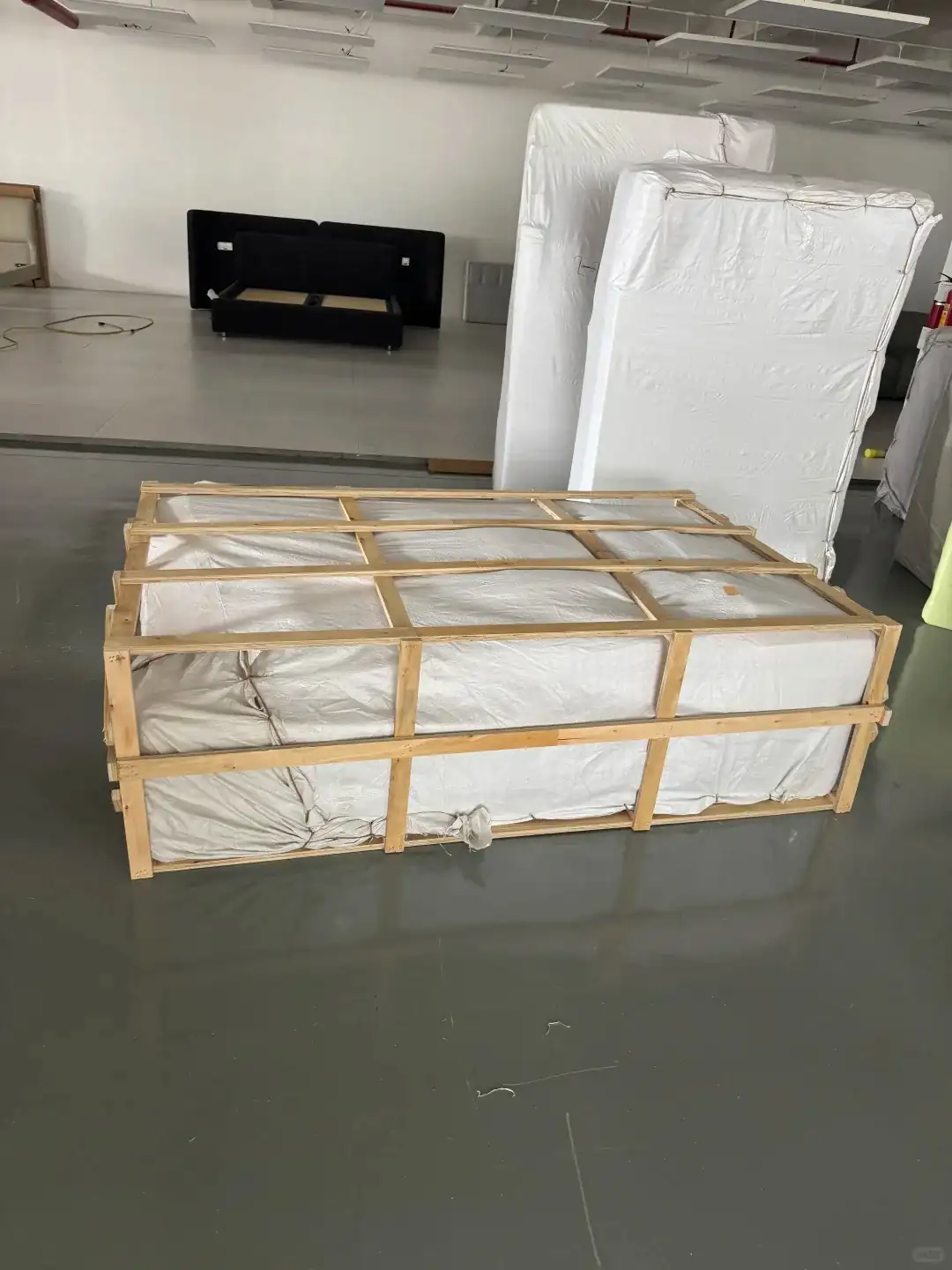
Heavy tiles, slabs and stone commonly need timber crates or dunnage. Where the destination applies ISPM 15, regulated wood packaging must receive an approved treatment and carry a legible, authorized IPPC mark with the country, treatment-provider and treatment codes. A handwritten “fumigated” note is not a substitute. Non-compliant wood can trigger treatment, disposal, re-export or other action at destination; confirm the destination rule and inspect the marks before loading.
When several factories share one shipment, create one master packing list while preserving supplier, SKU and crate identity. During container loading supervision, reconcile 100% of the shipping units, protect heavy goods from lighter cartons and document the container and seal.
8. Build a defensible Foshan buying plan
- Prepare the BOQ: quantity, application, drawings, dimensions, finish, performance, destination standards and required delivery date.
- Separate discovery from approval: use markets and showrooms to compare quickly, but approve only after the entity, site, sample and written specification align.
- Shortlist by category: choose two or three serious candidates for each critical package instead of collecting hundreds of unnormalized quotations.
- Build a mock-up: verify visual compatibility and installation interfaces before mass production.
- Model the container: estimate weight, CBM, crate/pallet configuration and consolidation sequence before placing fragmented orders.
- Assign release gates: supplier verification before deposit, audit before high-risk production, PSI before balance and loading supervision before sealed departure.