Screen before travel
Check the legal entity, registration status, enforcement signals, payment beneficiary and public-record inconsistencies.
Supplier videos and ISO certificates prove presentation—not operating capability. Our engineer enters the facility to verify that machines are installed and running, workers are producing, quality records are operational, and observed throughput can support your PO without quiet subcontracting to an unvetted workshop.
Experienced buyers use a hybrid defense. Start with a low-cost desktop supplier verification to remove obvious entity, litigation and payment-identity risks. Reserve an engineered on-site audit for suppliers that pass screening and will receive a meaningful deposit or PO. Screening effectiveness varies by supplier set; no fixed rejection percentage is promised.
Check the legal entity, registration status, enforcement signals, payment beneficiary and public-record inconsistencies.
Inspect machinery, people, process discipline, materials, environmental exposure and realistic throughput before capital commitment.
| Verification vector | Desktop verification | Full on-site audit |
|---|---|---|
| Legal existence | Confirms registered entity, status and declared capital | Matches the original licence and registered entity to the physical operating address |
| Machinery and tooling | Relies on submitted photos, documents and supplier claims | Records machine brand, tonnage, tooling, active status and available maintenance logs |
| Workforce and labor | Uses public filings where accessible | Observes floor headcount and reconciles shift rosters, supervisors and production areas |
| Subcontracting risk | Cannot establish where the order will physically be made | Traces material intake, core processes and output to expose undisclosed external workshops |
| Environmental and safety risk | Reviews public records and disclosed certificates | Checks available permits, hazardous-material controls, waste areas and visible shutdown risks |
| Primary blind spot | Cannot verify machines, active labor, odors, floor discipline or physical subcontracting | Cannot reveal every lawsuit, enforcement case, paid-in capital record or tax signal visible only in external databases |
The senior-buyer conclusion: neither method replaces the other. Database checks see risks hidden from the factory floor; on-site engineering checks expose realities that no registry, certificate or video can prove.
We agree what success looks like before starting. Findings are separated into facts, risks and recommended actions so your team can move quickly.
ISO 9001 certification is not treated as proof by itself. Where a supplier claims an ISO-aligned quality system, the audit samples the records and controls that should make it operational, including monitoring and measuring resources under ISO 9001:2015 Clause 7.1.5.
Define the legal entity, audit address, product family, critical processes, quoted capacity and suspected subcontracting risks.
Inspect original records and walk receiving, production, quality, warehouse, packing, maintenance, environmental and safety areas.
Stress-test the claim using machine utilization, cycle time, staffing, material traceability, calibration status and CAPA evidence.
Issue an English engineering-risk report separating observed facts, unavailable evidence, red flags and buyer actions before deposit or PO release.
Match the supplier’s legal identity to the physical site and identify structural risks that can interrupt production.
Test whether the factory’s stated quality system is visible in daily production rather than limited to certificates.
Reconcile operating equipment, cycle time, staffing and shifts to a defensible output range.
Identify which processes and materials remain under the audited facility’s direct control.
The visit stalls over tea and presentations while access to the real assembly floor is repeatedly postponed.
A supplier claims 50,000 units per month while half the machines are cold, disconnected or covered in dust.
Months of checks use the same pen, pressure and writing style—a signal that records may have been reconstructed before the visit.
Calipers, torque tools or pressure gauges lack current metrology status, exposing production tolerances to drift.
Blocked exits, unsafe chemical storage or missing treatment records create serious shutdown and continuity exposure.
The calculations below show the level of reasoning an audit record should contain. Exact output and compliance conclusions depend on the observed product, process, records and agreed scope.
 HOLD
Example model: five injection machines were declared, but only three were active. Observed cycle time was 27.5 seconds versus 18 seconds quoted; under the stated shift assumptions, modeled daily output was approximately 3,900 units—not the promised 8,000.
Risk intercepted: the buyer can correct the production plan before the PO turns into a late shipment.
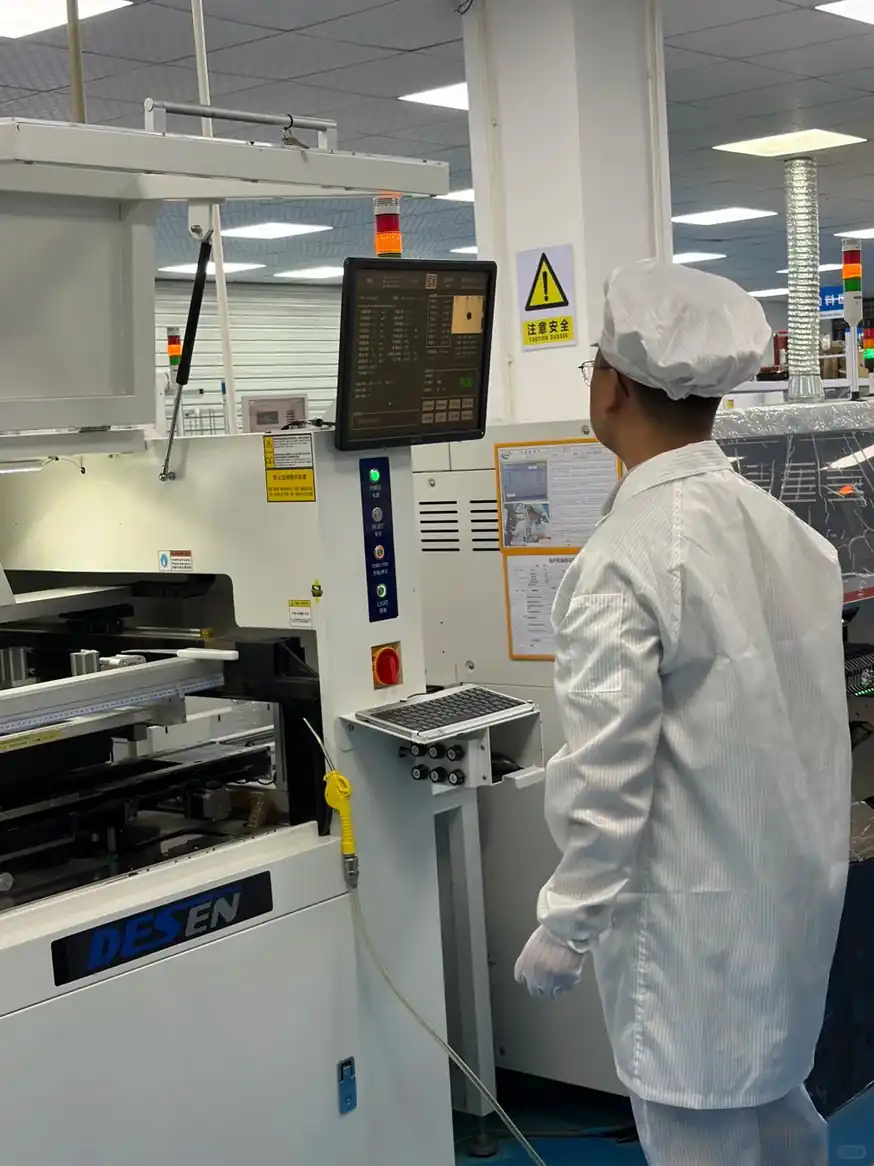 PASS
Example pass logic: incoming ABS grade and batch records matched the approved material, the multimeter carried current calibration evidence, and rejected units were physically segregated with traceable disposition records. No undisclosed subcontracting signal was identified within the sampled flow.
Control confirmed: material identity, measurement validity and reject handling remained traceable through the sampled process.
Share your current supplier, order size, deadline and biggest concern. We usually reply within one business day.