A perfume order fails when the bottle leaks in transit, the pump jams after three sprays, or the fill volume drifts below label claim. In China, these failures are rarely random. They are usually the result of a buyer treating a perfume factory as a single, self-contained operation when it is actually a coordination problem: glass from one supplier, pumps and actuators from another, filling and crimping at a third, and packaging artwork handled by someone else entirely.
This guide sets out an evidence-based workflow for international brand founders, procurement managers and compliance teams. It separates what can be verified on paper from what must be confirmed on site, and it explains how to structure a pre-shipment inspection so that leakage and batch failures are caught before balance payment, not after the container arrives.
Verifying Real Manufacturing Credentials: ISO 22716 (GMP), Production Licenses & Export History
The first step is to establish whether the filling site is a legitimate cosmetic manufacturer and not a trading company that subcontracts your order to an unknown workshop. A trading company can still coordinate production well, but you need to know who actually fills your perfume and where.
ISO 22716 (GMP) certificate verification. Ask for the certificate, then verify it independently. Check the certificate number against the issuing body’s public register, confirm the scope covers cosmetic filling, and confirm the audited site address matches the address where your order will be produced. A certificate held by a parent company or a different site does not cover your production line.
Cosmetic production license. In China, cosmetic manufacturers must hold a valid cosmetic production license issued by the provincial medical products administration. Request a copy and verify the license number and registered production address through official channels. Do not accept a business license as a substitute.
Export history. Ask for export records for perfume or fragrance products to your target market. This is not about volume; it is about whether the factory has already navigated the documentation, labeling and packaging requirements your market demands. Request redacted bills of lading or customs declarations. If the factory cannot show any perfume export history, treat the order as a first-time qualification and increase inspection coverage accordingly.
Quality management system evidence. A factory that claims ISO 9001 should be able to show how its sampling and analysis procedures work in practice. One useful signal is whether the manufacturer can demonstrate agreement between a first-time test conducted at its own laboratory and testing carried out in parallel at an independent test institute, with samples taken according to a set sampling plan. If this evidence is missing, do not assume the in-house lab results are reliable.
Use the following certificate and licence cross-check before treating a document as evidence:
| Field to verify | What must match | Red flag |
|---|---|---|
| Legal entity | Business licence, production licence, quotation and payee | Different entities with no documented relationship |
| Site address | Certificate scope and actual filling location | Certificate covers an office, parent company or another plant |
| Scope | Cosmetic manufacture/filling relevant to the ordered product | Generic management scope with no relevant activity |
| Certificate number and issuer | Issuer’s official register or direct confirmation | Unverifiable number, edited PDF or unknown issuer |
| Issue and expiry dates | Valid throughout planned production | Expired, suspended or due to expire before filling |
| Production licence categories | Product category and manufacturing activity | Business licence presented as a production licence |
| Audit trail | Latest audit, surveillance status and corrective actions | Supplier refuses to show current status or closes findings verbally |
The Compatibility Audit: Coordinating Separate Glass Bottle, Pump & Filling Factories
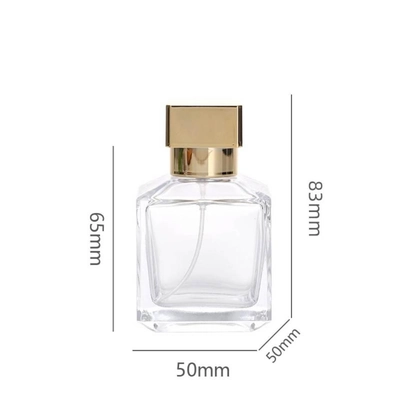
Perfume leakage is rarely caused by the filling factory alone. It is usually a compatibility problem: the glass neck finish does not match the pump crimp specification, the dip tube is too long or too short for the bottle shoulder, or the actuator fit is loose on the stem. When the bottle, pump and filling are handled by different factories, each one can be individually “correct” while the assembled product fails.
A compatibility audit should verify three things:
-
Dimensional matching. The bottle neck finish, pump crimp diameter, dip tube length and actuator bore must be checked against the same drawing revision. Request that the filling factory provide dimensional inspection records for incoming glass and pumps, not just a statement that they “fit.”
-
Crimp torque and seal integrity. The crimping process must be validated for the specific bottle and pump combination. Ask for crimp dimension records and any seal integrity test data from production trials. If the filling factory has never run this exact combination before, a pilot run with full leakage testing is non-negotiable.
-
Material compatibility. The perfume formula can interact with the pump gasket, dip tube or inner bottle coating. Swelling, softening or discoloration of elastomers is a common cause of delayed leakage. Request compatibility test records or arrange a small-scale soak test before mass production.
This is where buyer-side coordination matters. A supplier verification in China process should map the full supply chain, not just the filling site. If you are sourcing cosmetic packaging in China separately from filling, you need one party accountable for the assembled product specification.
Who should own the compatibility specification?
The filling factory should own the assembled-product specification, because they are the last party to touch the product before it ships. But do not assume they will. Put the dimensional drawings, crimp specifications and compatibility requirements into the purchase order, and make the filling factory responsible for incoming inspection of glass and pumps. If they push back, that is a warning sign.
On-Site Pre-Shipment Inspection (PSI) Checklist: Vacuum Leak, Fill Volume & Stability Tests
A pre-shipment inspection is only useful if it tests the right things in the right way. For perfume, the critical failure modes are leakage, under-fill, pump malfunction and visual defects on the bottle or packaging. The checklist below is a working structure, not a substitute for a product-specific inspection protocol.
| Inspection Area | What to Check | Why It Matters |
|---|---|---|
| Vacuum leak test | Submerge filled bottles in a vacuum chamber and observe for air bubbles escaping from the crimp or neck seal | Detects slow leaks that would not be visible at ambient pressure |
| Fill volume | Weigh a sample of filled bottles, subtract tare weight, and compare against the declared net content | Under-fill is a regulatory and commercial liability |
| Pump function | Actuate each sampled pump a set number of times and check spray pattern, output per stroke and stem return | Catches jammed pumps, weak spray and actuator misalignment |
| Crimp integrity | Measure crimp diameter and depth against specification on a sample of bottles | Confirms the seal was formed correctly during filling |
| Visual defects | Inspect glass for cracks, chips, bubbles, scratches and printing defects under controlled lighting | Protects brand presentation and prevents breakage in transit |
| Cap/actuator fit | Check that the cap or actuator seats correctly and does not wobble or fall off | Loose caps cause leakage and customer complaints |
| Batch code and label | Verify batch code format, legibility and position against the approved artwork | Required for traceability and recall readiness |
Vacuum leak testing. The most reliable method for detecting slow perfume leakage is vacuum testing. Filled bottles are placed in a chamber, vacuum is applied, and the operator watches for a stream of bubbles from the crimp area, neck or pump seal. For buyer planning, a commonly specified starting protocol is -0.06 MPa to -0.08 MPa held for 3–5 minutes. This is not a universal pass/fail standard: the buyer, filling factory and inspection provider must approve the exact vacuum level, hold time, sample size, liquid fill, orientation and acceptance rule for the bottle-pump combination. Test samples must come from the finished production run, not only from a pre-production pilot.
Fill volume verification. Perfume is sold by volume, but volume is measured by weight in practice. The inspection protocol should specify the tare weight method, the number of bottles to weigh, and the acceptable tolerance. Do not accept a single average value; check individual bottles against the minimum fill requirement.
Stability-related checks. Full stability testing is a laboratory exercise that happens before production, not during PSI. However, the PSI should confirm that the production batch matches the formula and packaging configuration that was stability-tested. If the pump, gasket material or bottle coating changed after stability testing, the stability data no longer applies.
What sample size should a perfume PSI use?
The sample size depends on the lot size, defect risk and buyer requirements. A practical default for general finished-goods inspection is ISO 2859-1 or ANSI/ASQ Z1.4, General Inspection Level II, with acceptance limits such as Critical 0, Major 2.5 and Minor 4.0. These are buyer-selected starting criteria, not automatic perfume-industry law. Safety-critical leakage, broken glass, contamination and incorrect regulated labelling may require zero acceptance or a dedicated functional sample beyond the general AQL sample. Draw samples randomly from finished, packed production rather than allowing the factory to select them.
Checking Packaging Artwork, Batch Codes & Barcode Scannability Before Balance Payment
Packaging errors are among the most expensive to fix after shipment. A perfume carton with a misspelled ingredient name, a batch code that rubs off, or a barcode that does not scan at retail can trigger rejection, rework or recall.
Artwork verification. Compare the printed carton, label and bottle decoration against the approved artwork file. Check text, logos, colors, ingredient lists, warnings and regulatory symbols. Pay particular attention to diacritical marks, allergen declarations and market-specific legal text. A visual comparison is not enough for small text; use a printed proof overlay or high-resolution photography.
Batch code durability. Rub the batch code with a finger, then with a cloth dampened with the product itself. Perfume is a solvent; a batch code printed with the wrong ink will dissolve on first contact. The code must remain legible after contact with the product and after normal handling.
Barcode scannability. Scan every barcode on the carton and label with a retail-grade scanner, not a phone app. Check that the encoded number matches the printed human-readable number, and that the barcode grade meets the minimum required by your retail channel. A barcode that scans in the factory but fails at a retail checkout is a common and costly failure.
Batch code traceability. Confirm that the batch code on the carton matches the code on the bottle and, where applicable, on the outer shipper. Mismatched codes break traceability and complicate any future recall.
A pre-shipment inspection service should include packaging and barcode checks as standard, not as an optional add-on. If your current inspection provider does not scan barcodes, change providers.
How do I verify packaging artwork without flying to China?
Request high-resolution photographs of the printed packaging against the approved artwork, taken under controlled lighting. For critical text, request close-up photos at a resolution that allows you to read every character. For color, request a physical sample via sample consolidation in China before mass production. Digital photos cannot fully replace a physical sample for color matching, but they can catch most text and layout errors.
Book an Independent Perfume Factory Audit or QC Inspection in Guangzhou & Jiangsu
Perfume production in China is spread across connected clusters rather than one complete location. Guangzhou Baiyun and Huadu are practical starting points for cosmetic manufacturers and filling operations; Foshan Nanhai and Shunde have metal, anodised component and cap-related supply networks; Dongguan is strong in premium rigid boxes; and perfume-bottle sourcing often extends to Xuzhou, Jiangsu, and Yuncheng, Shandong. Jiangsu and Zhejiang also contain fragrance and fine-chemical suppliers. Cluster location is only a sourcing clue—the audit must verify the actual legal entity, production address, subcontracting model and capability for the ordered SKU.
An independent audit should be conducted by a party that does not receive commissions from the factory and does not have a financial interest in the order passing. That independence is what makes the audit findings usable for a go/no-go decision. A independent factory audit service should cover:
- Site ownership or lease verification
- Cosmetic production license and ISO 22716 certificate verification
- Production line capability for the specific bottle and pump combination
- Incoming inspection procedures for glass and pumps
- Cleaning and changeover procedures between fragrance batches
- Batch record documentation and traceability
- Export documentation experience
Cleaning procedures deserve particular attention in perfume production. Fragrance oils are notoriously difficult to remove from product contact surfaces, and cross-contamination between batches can ruin an entire production run. Cleaning procedures should be documented and consistent for their intended use, and the validation approach should show that residues are controlled on product-contact surfaces. Ask the auditor to review cleaning records and, if possible, observe a changeover.
For buyers who cannot visit the factory themselves, a China quality-control service can act as the buyer’s eyes on site. The key is that the QC provider works for the buyer, not the factory, and reports findings without filtering.
Can one audit cover both the filling factory and the packaging suppliers?
No. The filling factory and the glass or pump suppliers are separate legal entities at separate addresses. Each requires its own audit. However, the filling factory audit should include a review of how the factory manages incoming packaging components, because that is where compatibility failures are caught or missed. If you are coordinating packaging and filling through a cosmetic packaging sourcing in China partner, that partner should coordinate audits across all sites and consolidate the findings into one actionable report.
Perfume sourcing in China rewards buyers who treat the supply chain as a system, not a single factory. Verify credentials independently, audit the compatibility between glass, pump and filling, run a PSI that actually tests for leakage and fill accuracy, and check packaging before you release balance payment. If you are preparing a perfume order and want an independent audit or pre-shipment inspection structured around these failure modes, send Jaime Sourcing your perfume project brief and we will respond with a scoped proposal.
Turn your fragrance concept into a verifiable supplier brief.
Share your target market, bottle size, fragrance format, quantity, packaging direction and launch timing. We will identify the supplier, sampling, compliance-document, inspection and freight checkpoints.