Sourcing private label or OEM perfume from China is rarely a one-factory project. A finished fragrance typically crosses at least four or five independent production sites before it reaches a carton: the fragrance house or compounding lab, the filling line, the glass bottle plant, the pump and cap supplier, and the folding-carton printer. Each site has its own lead time, defect profile, and minimum order quantity.
That structure creates opportunity and risk. The opportunity is cost and flexibility. The risk is cross-factory finger-pointing when a pump leaks, a bottle finish is off-spec, or a carton varnish cracks. This guide explains how to map the supply chain, choose the right sourcing model, set realistic MOQs, and use an on-ground sourcing team to keep accountability clear.
China’s Perfume Supply Chain Map: Guangzhou Liquid/Filling Hubs vs. Glass & Packaging Clusters
China’s perfume supply chain is geographically split. Buyers who assume one city handles everything often end up with mismatched components and inflated freight costs.
Guangzhou and the Pearl River Delta: formulation, filling, and finishing. Guangzhou is the dominant hub for cosmetics and personal-care manufacturing in southern China. The surrounding cities — Foshan, Dongguan, and Shenzhen — host a dense network of filling lines, fragrance compounders, and packaging assemblers. Many filling operations in this region handle alcohol-based fragrances, eau de toilette, body mists, and roll-ons. They typically source fragrance oil from specialist compounding houses rather than producing it in-house.
For a practical sourcing route, buyers commonly screen cosmetics and filling suppliers around Guangzhou Baiyun and Huadu, metal and decorated component suppliers around Foshan Nanhai and Shunde, premium rigid-box converters in Dongguan, and high-flint perfume-bottle capacity in Xuzhou, Jiangsu, and Yuncheng, Shandong. These are sourcing clusters, not guarantees of capability: every candidate still needs entity verification, sample approval, compatibility testing, and site-specific production evidence.
Glass clusters: Guangdong, Shandong, and beyond. Perfume bottles are not usually made on the same site as the liquid. Glass bottle production clusters are concentrated in specific industrial zones, including parts of Guangdong and Shandong. These plants specialize in molded or blown glass, frosting, coating, screen printing, and hot stamping. A Guangzhou filling line may receive bottles from a glass plant hundreds of kilometers away.
Pumps, caps, and actuators. Fine-mist sprayers, crimp pumps, and caps are precision plastic or metal components. They are often produced by specialized injection molders and metal stampers, not by the filling factory. Compatibility between the pump dip tube, actuator, and bottle neck finish is a common failure point that only becomes visible during filling or after shipping.
Folding cartons and rigid boxes. Perfume cartons are usually printed by packaging converters separate from the glass and filling sites. Rigid setup boxes, magnetic-closure boxes, and paperboard cartons each come from different machine platforms and have different minimums.
Testing and dangerous-goods logistics. Alcohol-based fragrances are classified as dangerous goods for air and sea transport. Export requires correct UN packaging, proper labeling, and documentation. Testing for flash point, stability, and restricted substances is typically arranged through third-party laboratories, not the filling factory itself.
Because no single factory owns the entire chain, a buyer-side sourcing team that coordinates and verifies each supplier independently becomes valuable. Jaime Sourcing operates across Guangzhou, Shenzhen, Dongguan, and Foshan, providing supplier verification in China and sample consolidation in China so that components from different clusters can be checked together before mass production.
OEM vs. ODM vs. Ready-to-Ship Stock Fragrances: Which Model Fits Your Brand?
Perfume sourcing in China generally falls into three models. Choosing the wrong one can waste months and inflate minimums.
OEM (original equipment manufacturing). You supply the formula, the packaging specifications, or both. The factory fills to your spec. This model gives the most control but requires the most technical documentation. You must define the fragrance oil, alcohol grade, concentration, bottle finish, pump output, and carton dimensions. OEM is suitable for brands with an existing formula or a clear technical brief.
ODM (original design manufacturing). The supplier offers existing fragrance formulations and packaging options that you can customize with your brand name, logo, and minor modifications. ODM is faster and has lower upfront cost, but your product may not be unique. Some ODM fragrance houses hold large libraries of stock scents that can be adjusted by top, middle, or base notes.
Ready-to-ship stock fragrances. The supplier has finished, filled, and packaged perfume already in inventory. You buy under your label or as-is. This is the fastest route for market testing but offers almost no differentiation. Stock fragrances are common for promotional items, hotel amenities, or small e-commerce launches.
The right model depends on your brand stage. A startup testing a niche scent may begin with ODM or stock, then move to OEM once volume justifies a proprietary formula. A brand with a registered formula and custom bottle should go OEM from day one.
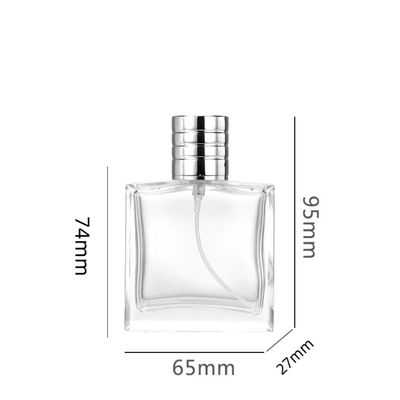
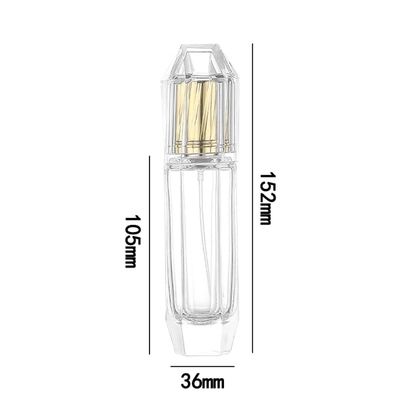
Whichever model you choose, document the specification before payment. A one-page spec sheet should list fragrance concentration, alcohol type, bottle capacity, neck finish, pump dosage, cap material, carton dimensions, and any restricted-substance requirements. Without this, the factory will fill to its own default, and disputes become difficult to resolve.
Realistic MOQs in China: Navigating 500–1,000 Unit Startup Orders vs. Mass Production
MOQs in Chinese perfume manufacturing are driven by component suppliers more than by the filling line. The filling line can often run a few hundred units, but the glass bottle, pump, and carton suppliers set the real floor.
Typical MOQ ranges reported by buyers:
| Component or Service | Common Startup MOQ | Notes |
|---|---|---|
| Stock glass bottle | 500–1,000 pcs | Depends on existing mold availability |
| Custom glass bottle mold | 5,000–10,000 pcs | Mold fee separate; unit price drops sharply above 10k |
| Stock pump/cap | 1,000–5,000 pcs | Color matching may raise MOQ |
| Custom pump/cap color | 5,000–10,000 pcs | Requires color chip approval |
| Folding carton | 500–1,000 pcs | Digital printing lowers MOQ but raises unit cost |
| Rigid setup box | 500–1,000 pcs | Hand assembly common at low volume |
| Filling and assembly | 500–1,000 pcs | Often combined with component MOQs |
| Fragrance oil (stock) | 1–5 kg | Enough for several hundred to a few thousand units |
| Fragrance oil (custom) | 5–25 kg | Depends on raw material minimums |
A 500-unit startup order is usually only feasible if you accept stock components: an existing glass bottle, a standard pump, and a digitally printed carton. A fully custom bottle with custom pump color and rigid box will realistically start at 3,000–5,000 units, and often higher once mold amortization is included.
Mass production — 10,000 units or more — unlocks meaningful unit-cost reductions because component suppliers can run dedicated production without changeover. At this volume, buyers can also negotiate for dedicated filling-line time and more rigorous inline quality checks.
Before committing to a low MOQ, calculate landed cost per unit, not just ex-works price. Air freight for alcohol-based perfume is expensive and restricted. Sea freight requires dangerous-goods documentation and longer transit. A 500-unit order shipped by air may have a freight cost per unit higher than the product cost itself. Jaime Sourcing provides landed-cost calculation and international freight coordination so buyers can compare true per-unit economics before ordering.
5 Red Flags When Vetting Chinese Perfume Factories Online
Online supplier directories and trade platforms are useful for initial screening, but they are not verification. A polished profile page does not confirm that a factory can fill alcohol-based fragrance safely or that its glass supplier can hold a neck-finish tolerance.
1. The factory claims to make everything in-house. A single factory that says it produces fragrance oil, glass, pumps, caps, cartons, and does filling under one roof is almost certainly a trading company or a marketing front. Real perfume supply chains are fragmented. A factory that claims total vertical integration should be audited on-site before you believe it.
2. No documented dangerous-goods or alcohol-handling experience. Alcohol-based perfume is flammable. Filling lines must have appropriate ventilation, grounding, and fire-safety systems. If a supplier cannot explain how it handles alcohol storage, flash-point testing, or UN packaging, it is not a qualified perfume filler.
3. Vague answers on component compatibility. Ask which pump model fits which bottle neck finish, and what the dip-tube length tolerance is. If the sales contact cannot answer or says “we will check later,” the factory may be sourcing components opportunistically rather than from stable, tested suppliers.
4. No third-party test reports or refusal to allow inspection. A legitimate factory should be able to share recent test reports for similar products and should allow a pre-shipment inspection. Refusal to permit an independent audit is a strong negative signal. Independent factory audit service and pre-shipment inspection service are standard practice for serious buyers.
5. Prices far below market. Perfume cost is driven by fragrance oil quality, alcohol grade, glass weight, and pump precision. A quote 40% below comparable suppliers usually means diluted fragrance concentration, thinner glass, lower-grade alcohol, or a pump that will leak. Low price is not a deal; it is a specification change you have not seen yet.
How an On-Ground China Sourcing Agent Eliminates Cross-Factory Finger-Pointing
The most common failure mode in Chinese perfume sourcing is not a single bad factory. It is the gap between factories. The glass bottle arrives with a neck finish slightly out of spec. The pump supplier says its pump is fine. The filling line says the leak is a component problem. The carton printer says the varnish cracking is a handling issue. Each supplier is partially right, and the buyer is stuck in the middle.
An on-ground sourcing agent changes this dynamic in three ways.
First, verification before commitment. Desk research tells you what a supplier claims. On-site verification tells you what the supplier actually has: filling-line condition, alcohol storage, quality-control records, and whether the “factory” is a real production site or a showroom. Jaime Sourcing distinguishes desk research from on-site verification and documents what was physically confirmed.
Second, component-level coordination. A buyer-side agent can consolidate samples from the glass plant, pump supplier, and carton printer, then check compatibility before mass production. This catches neck-finish mismatches, dip-tube length errors, and carton dimension problems while they are still cheap to fix. Sample consolidation in China is a practical tool for this.
Third, independent quality control at the filling line. When the agent is paid by the buyer and receives no supplier commission, its inspection report has no incentive to pass defective goods. China quality-control service can include inline checks during filling, finished-goods sampling, and pre-shipment inspection. If a defect is found, the agent identifies which supplier caused it and drives the corrective action.
What should I verify before paying a deposit?
Before any deposit, confirm the following in writing: the exact fragrance oil and concentration, alcohol grade, bottle specification with neck finish drawing, pump model and dosage, cap material and color, carton structure and print file, target fill volume, and the inspection standard. If any of these is missing, the factory will fill the gap with its own assumption. Send Jaime Sourcing your perfume project brief to get a documented specification review before you commit.
How do I know if a low MOQ is actually workable?
Ask the supplier to break down the MOQ by component. If the bottle is stock, the pump is stock, and the carton is digitally printed, 500 units may be feasible. If any component requires a new mold or custom color, the real MOQ is set by that component. A buyer-side agent can verify component availability and confirm whether the quoted MOQ is real or a sales tactic.
Who is responsible when a filled bottle leaks after shipping?
Responsibility depends on where the leak originates. A neck-finish mismatch is usually the glass or pump supplier’s fault. A crimp failure may be the filling line’s fault. A dip-tube that is too long can cause poor spray and leakage at the actuator. Without an independent inspection record, each supplier will blame the others. An on-ground agent that inspected components before filling and checked finished goods before shipment can identify the root cause and assign responsibility.
Ready to source private label or OEM perfume without getting caught between factories? Jaime Sourcing provides buyer-side supplier verification, factory audits, sample consolidation, quality control, and freight coordination across Guangzhou, Shenzhen, Dongguan, and Foshan. We do not manufacture perfume and we do not take supplier commissions — we verify, coordinate, and inspect on your behalf. Send Jaime Sourcing your perfume project brief to start with a documented specification and a realistic sourcing plan.
Turn your fragrance concept into a verifiable supplier brief.
Share your target market, bottle size, fragrance format, quantity, packaging direction and launch timing. We will identify the supplier, sampling, compliance-document, inspection and freight checkpoints.