
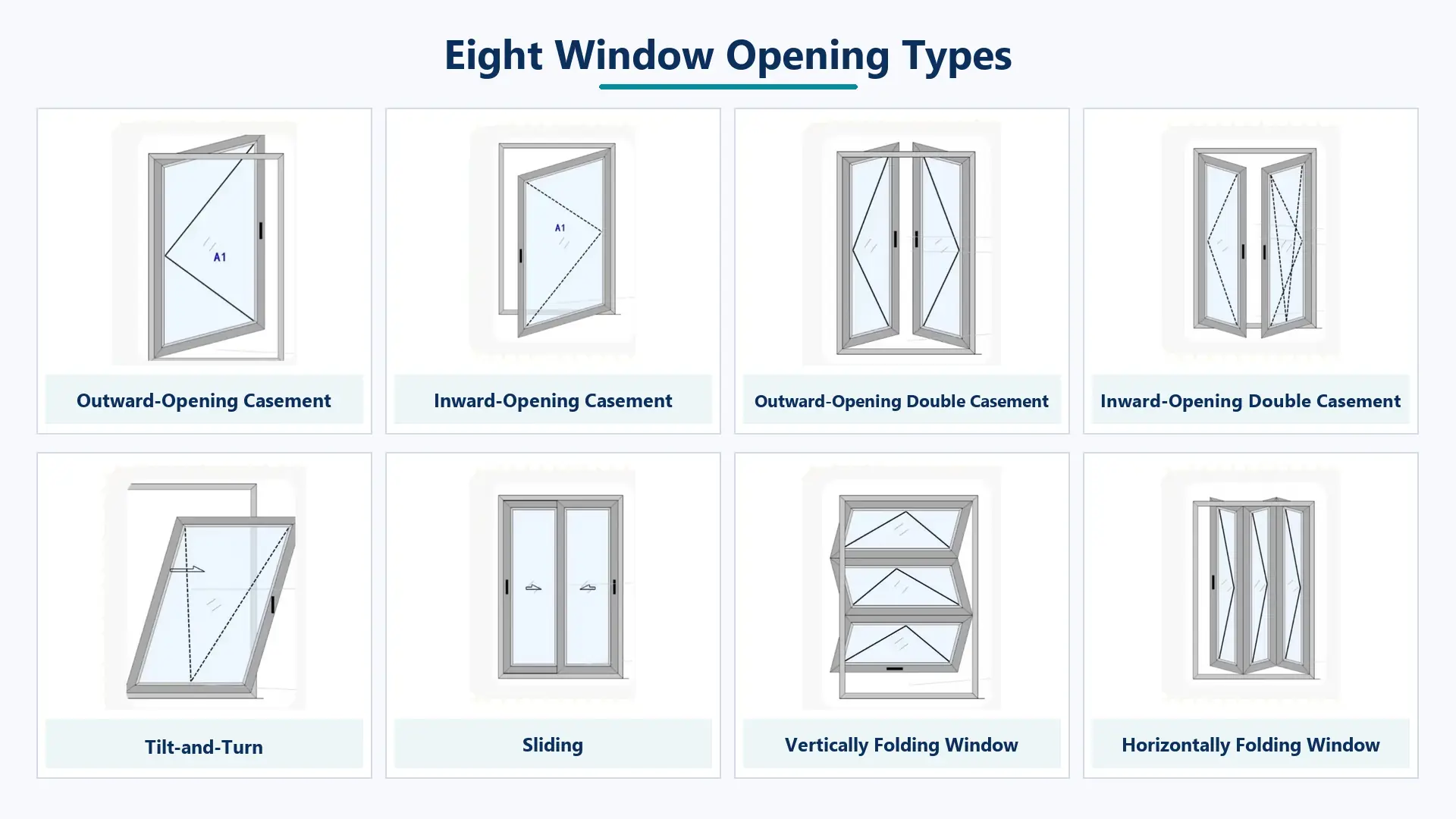
The way a window opens affects ventilation, airtightness, cleaning, safety, hardware loads, and usable space. The most visually impressive mechanism is not always the most practical choice for a home.
This guide compares four common opening types: casement, tilt-and-turn, sliding, and parallel slide-and-tilt.
Casement Windows
A casement sash rotates around hinges or friction stays on one side. It may open inward or outward.
An inward-opening casement is generally easier to clean from inside and can use compression seals, but the sash occupies interior space and may interfere with curtains, furniture, countertops, or taps.
An outward-opening casement preserves interior space, but exterior hardware receives more environmental exposure and the outer glass can be harder to clean. Permission depends on local regulations, the building design, and property-management rules. Avoid universal statements that all high-rise outward-opening windows are prohibited or that every low-rise installation is acceptable.
Tilt-and-Turn Windows
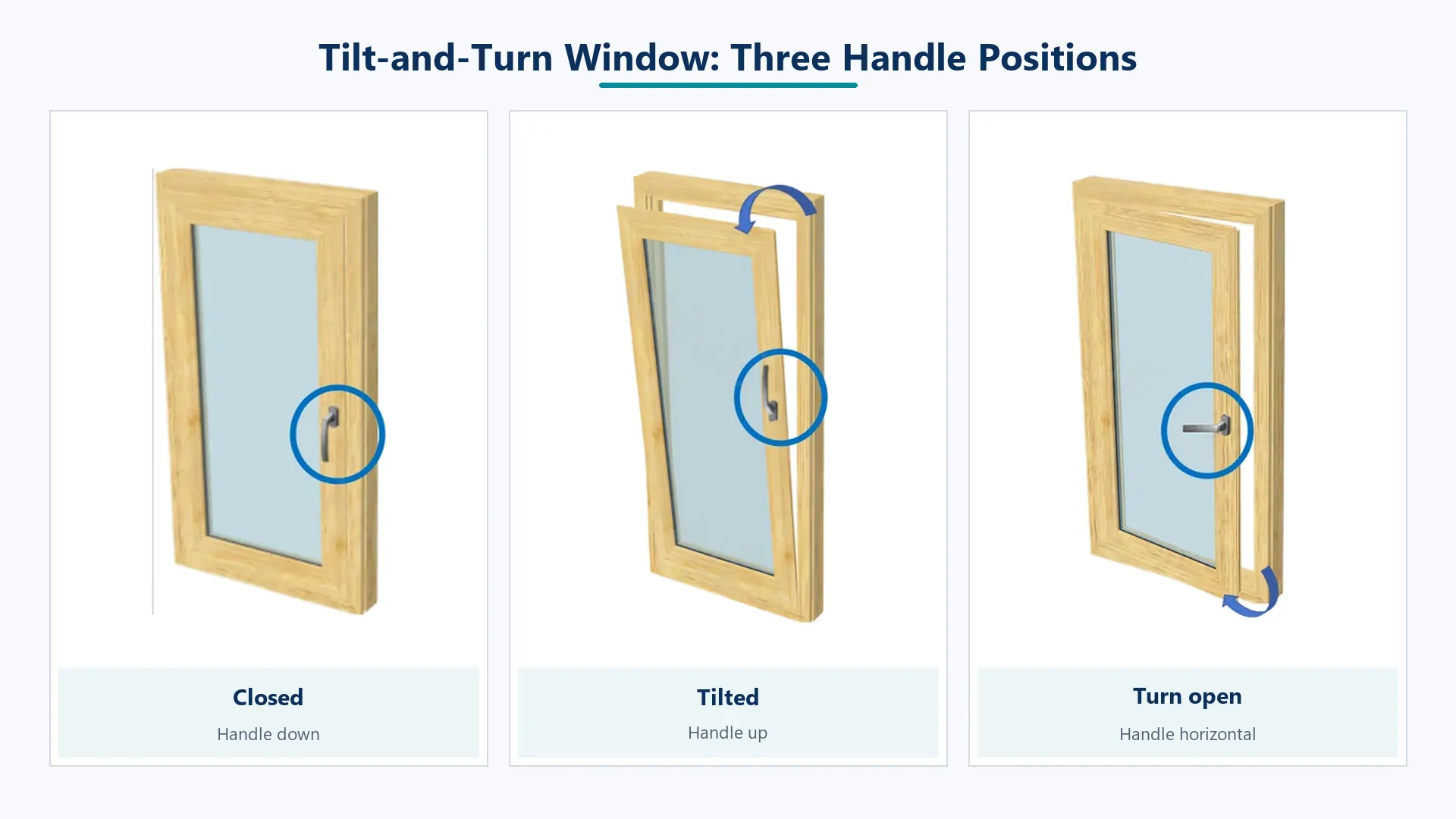
Tilt-and-turn hardware allows the same sash to open inward like a casement or tilt inward at the top. The full-open position provides access and larger ventilation, while the tilt position offers a smaller ventilation opening.
The system uses more complex hardware and requires correct installation, adjustment, and operation. The tilted opening also provides limited effective ventilation compared with a fully open sash.
Marketing claims such as “rainproof ventilation” should be qualified. Wind direction, rainfall intensity, façade exposure, and opening angle affect whether rain can enter. Windows should be closed during severe weather or when required by the manufacturer.
Sliding Windows
Sliding sashes move horizontally along tracks and do not sweep into interior or exterior space. This makes them useful near furniture or countertops. A typical two-panel sliding window opens only part of the total opening.
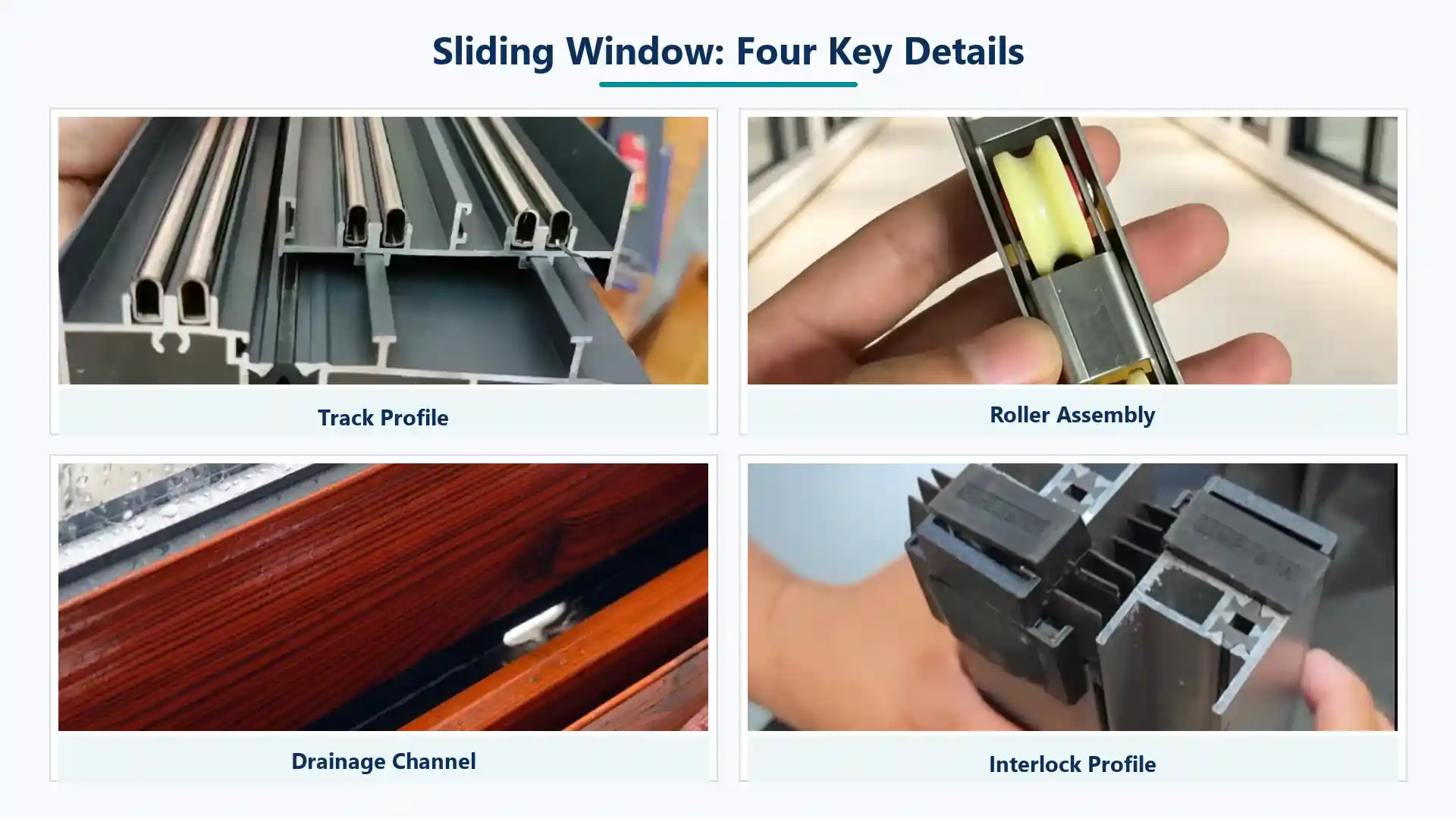
Traditional sliding designs need movement clearance and often use brush seals, which can make very high airtightness, watertightness, and acoustic performance more difficult to achieve. High-performance sliding systems can improve these characteristics, so the product should be judged by its design and test results rather than the word “sliding.”
Check track drainage, roller capacity, anti-lift or anti-derailment devices, interlock seals, and locking arrangements.
Parallel Slide-and-Tilt Windows
A parallel slide-and-tilt sash moves inward away from the sealing plane before sliding along the frame. It can also tilt for limited ventilation. The closed sash can use compression sealing while avoiding the full interior swing of a conventional inward-opening casement.
This system requires compatible profiles, hardware grooves, careful sash-weight control, precise installation, and experienced adjustment. Before ordering, confirm permitted sash dimensions and weight, spare-part availability, and local service capability.
Opening-Type Comparison
| Opening Type | Space Use | Ventilation | Sealing Potential | Cleaning | Main Considerations |
|---|---|---|---|---|---|
| Inward casement | Uses interior swing space | Large opening | Compression sealing is possible | Outer glass is accessible | Furniture and curtain conflicts |
| Tilt-and-turn | Uses space when fully open | Full opening plus limited tilt | Compression sealing is possible | Generally accessible | Hardware operation and adjustment |
| Sliding | No swing space | Partial opening in common layouts | Depends strongly on system | Tracks require cleaning | Rollers, drainage, anti-lift design |
| Parallel slide-and-tilt | Reduced swing requirement | Sliding plus tilt mode | Compression sealing is possible | More complex system | Cost, adjustment, spare parts |
The table describes general structural tendencies. Actual performance must be verified for the specific product.
Which Opening Type Fits Each Room?
Balcony
Balance views, ventilation, cleaning, glass replacement, and wind resistance. Large fixed panes with small opening sashes may reduce ventilation and complicate future replacement.
Roadside Bedroom
Prioritize airtightness and acoustic performance. Compression-sealed products may help control gaps, but glass, perimeter installation, and a separate ventilation strategy remain important.
Kitchen
Check interference with taps, cabinets, worktops, and extract equipment. Choose an opening that is easy to clean and provides sufficient effective ventilation.
Bathroom
Balance privacy, moisture removal, safety, operating height, and cleaning access. A small opening does not guarantee protection from wind-driven rain.
Child’s Room
Use suitable restrictors or child-resistant hardware and avoid climbable furniture beside the window. An insect screen is not a fall-protection device.
Sash Size and Hardware Must Be Matched
There is no universal maximum sash width or height for every window system. Ask for:
- sash width, height, aspect ratio, and calculated weight;
- complete hardware model and rated capacity;
- manufacturer-permitted size and weight range;
- engineering verification for oversized, heavy, or high-wind applications.
Glass weight alone is not the complete sash weight. Profiles, beads, spacers, and attached hardware must also be included.
Conclusion
Choose an opening type by first eliminating options that conflict with regulations, safety, furniture, cleaning, or maintenance. Then compare ventilation and sealing, and finally verify that sash dimensions and hardware capacity match the selected system.
Suggested Internal Links:
- How to Choose Thermal Break Aluminum Windows
- How to Choose Window Glass
- How to Choose Window Hardware, Gaskets, and Sealants
Turn your requirements into a comparable supplier brief
Share dimensions, quantities, performance targets and destination. We will organize the key inputs before factories and quotations are compared.