
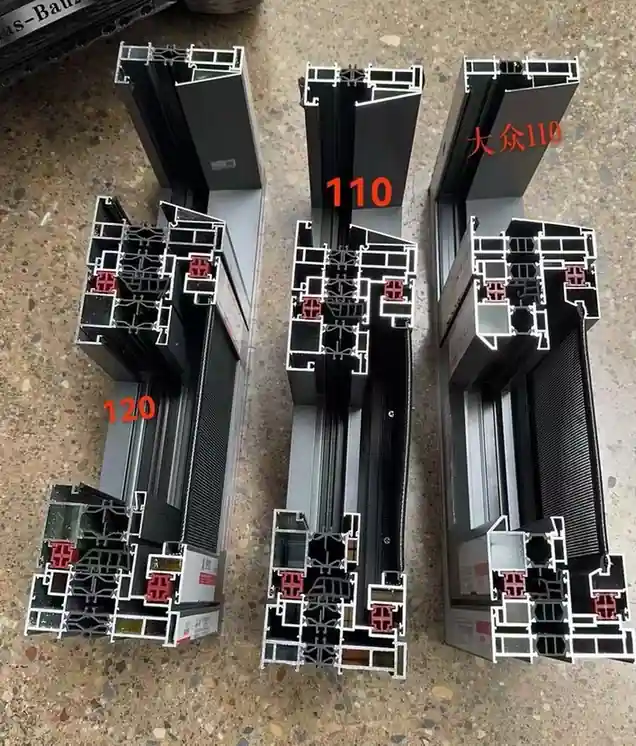
Buyers often compare thermal break aluminum windows by series number, wall thickness, and chamber count. These details matter, but none of them can independently establish the quality or performance of a complete window.
A useful profile assessment considers alloy documentation, load-bearing wall thickness, thermal break material, cross-section functions, compatibility with glass and hardware, corner fabrication, and whole-window test results.
What Do 6063-T5 and 6063-T6 Mean?
6063 is a commonly used aluminum alloy designation for architectural extrusion. T5 and T6 indicate different heat-treatment conditions that affect mechanical and fabrication properties.
The marking alone is not proof of composition. Color, tapping sound, and manual bending cannot reliably distinguish “primary” from “recycled” aluminum or confirm alloy performance. Review material certificates, traceable profile documentation, and relevant chemical or mechanical test reports where necessary.
The more useful questions are: What alloy and temper are declared? Which standard is used? Is the material traceable? Does the fabricated window demonstrate the required performance?
What Do 60, 70, 80, and 108 Series Mean?
Series numbers usually relate to a frame dimension, but naming practices differ among manufacturers. Two products both sold as “70 series” may have different thermal strips, chambers, glazing pockets, gasket arrangements, and hardware grooves.
Do not assume that:
- a 70 series window always outperforms a 60 series window;
- a series number determines a fixed glass build-up;
- a deeper frame automatically provides better sound insulation or wind resistance.
Request cross-section drawings for the frame, sash, mullion, and coupling profiles.
How Should Aluminum Wall Thickness Be Checked?
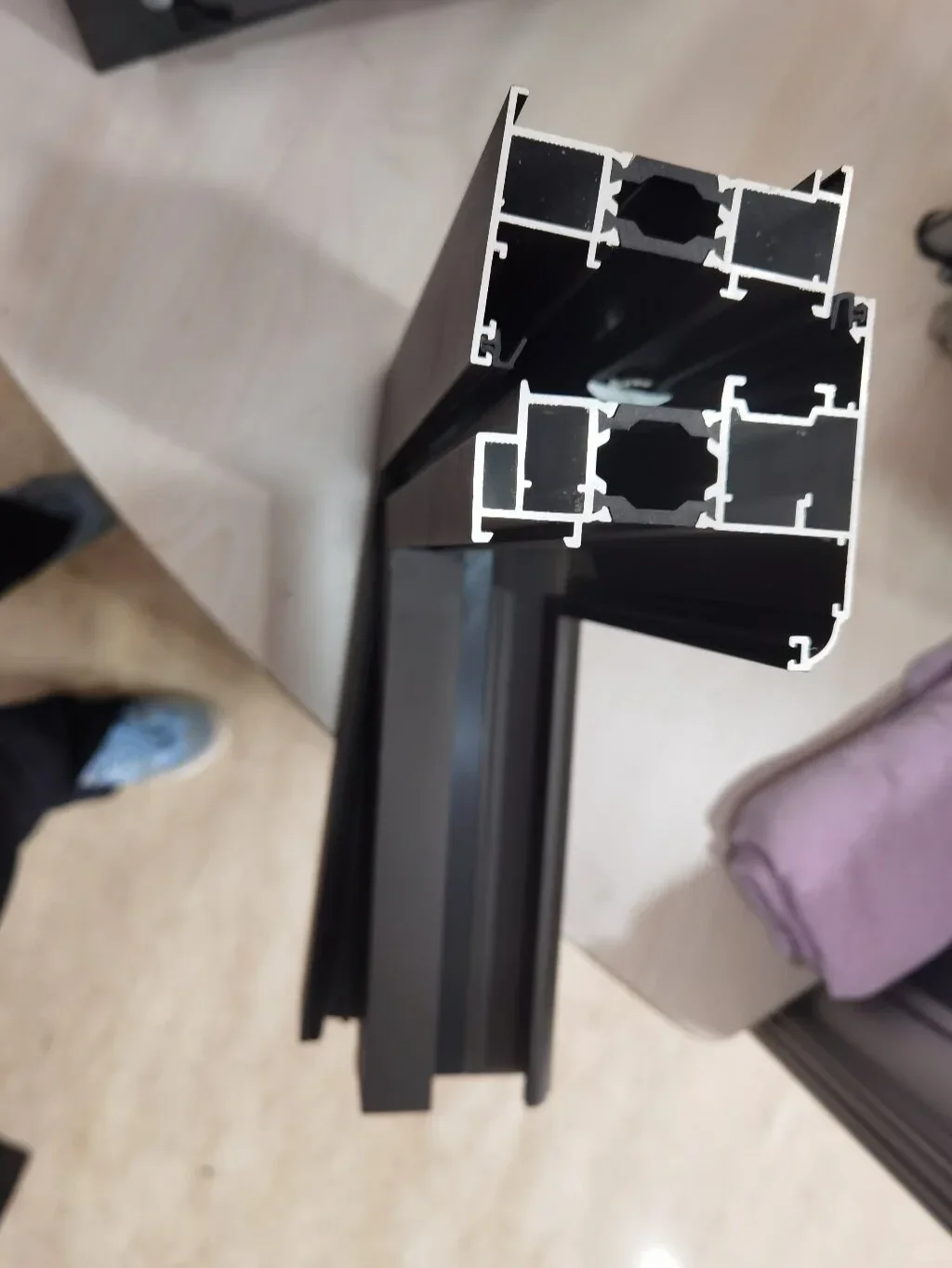
Wall-thickness requirements depend on whether the product is a door or window, interior or exterior, and whether the measured section is a primary load-bearing location. A glazing bead or decorative fin should not be measured and presented as the thickness of the complete system.
Chinese standard GB/T 8478-2020 specifies nominal wall-thickness requirements for relevant load-bearing primary profiles and also requires thickness to be determined by design calculation or testing. When citing a number, state the exact product type and measured location.
Thickness is only one structural variable. Cross-section geometry, chamber dimensions, reinforcement ribs, mullions, connections, window size, and wind load also influence capacity.
What Is a PA66 GF25 Thermal Strip?
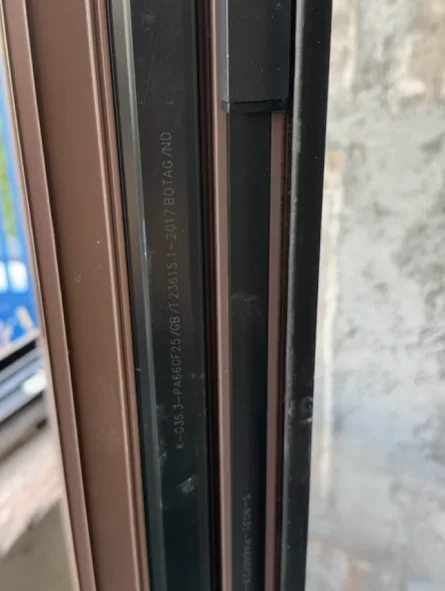
PA66 GF25 generally refers to polyamide 66 reinforced with approximately 25% glass fiber. For strip-type thermal break profiles, the material and composite profile should be evaluated against the applicable product system and standards.
PVC and reinforced polyamide differ in thermal expansion, strength, and temperature behavior. Verification should rely on markings, material reports, composite-profile performance, and traceability rather than a flame test. Burning a strip is unreliable and may release harmful smoke.
A wider strip does not automatically guarantee a lower whole-window U-value. Glass, frame-to-glass ratio, cavities, airtightness, and installation details also matter.
Are More Profile Chambers Better?
Profile chambers may provide structural support, thermal separation, hardware space, or drainage. Counting chambers without understanding their functions is misleading.
Review whether:
- the internal and external aluminum sections are effectively separated;
- the glass edge, thermal strip, and gasket positions form a coherent thermal zone;
- opening joints create continuous compression seals;
- infiltrated water has a clear drainage path;
- hardware fixing locations have adequate support;
- mullion and coupling details meet structural requirements.
Colored “isotherm” marketing diagrams can help explain a concept, but actual thermal performance should be supported by calculation or complete-window testing.
How Should Corner Assembly Be Evaluated?
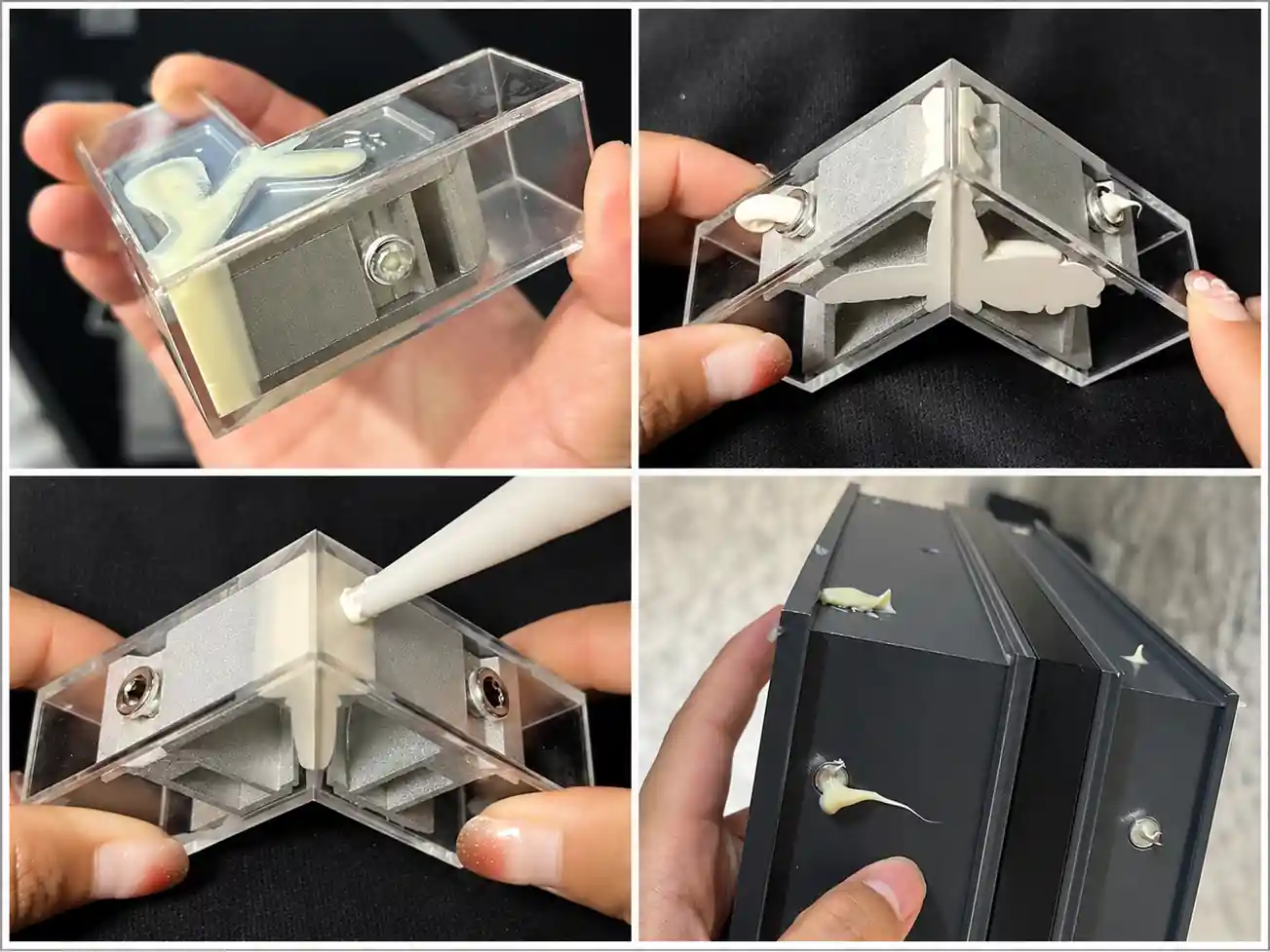
Crimped, pinned, and screwed corner connections can all be valid when used within a properly designed system. Performance depends on the fit between profile and cleat, machining accuracy, mechanical fastening, corner adhesive, injection paths, and process control.
Inspect 45-degree joints for open gaps, steps, poor alignment, and incomplete sealing. Do not treat a particular cleat name as proof of corner strength or watertightness.
Profile Inspection Checklist
- series and cross-section match the approved sample and drawings;
- relevant wall thickness has a clear technical basis;
- surface finish is free from obvious damage, exposed substrate, and deformation;
- thermal break markings and documentation are verifiable;
- frame, sash, mullion, and coupling profiles have not been substituted;
- corner joints and mechanical connections match the approved process.
Conclusion
Do not choose a thermal break aluminum profile by series number, thickness, or chamber count alone. Evaluate the material, cross-section functions, thermal break, corner fabrication, compatibility, and complete-window evidence as one system.
Suggested Internal Links:
- How to Choose Thermal Break Aluminum Windows
- How to Choose Window Glass
- How to Choose Window Hardware, Gaskets, and Sealants
Technical References: Chinese standards GB/T 8478-2020, GB/T 5237.1-2017, GB/T 5237.6-2017, GB/T 23615.1, and JG/T 174. Confirm current editions before publication.
Turn your requirements into a comparable supplier brief
Share dimensions, quantities, performance targets and destination. We will organize the key inputs before factories and quotations are compared.