

When buying replacement windows or balcony glazing, it is easy to become distracted by terms such as “70 series,” “multi-chamber profile,” “triple seal,” and “system window.” These terms may describe individual features, but no single feature determines the quality of a complete window.
A window is a coordinated assembly of profiles, glass, hardware, gaskets, fabrication details, drainage, and installation joints. The right buying process begins with the building and its environment, then defines the required performance, and only then compares product configurations and suppliers.
What Is a Thermal Break Aluminum Window?
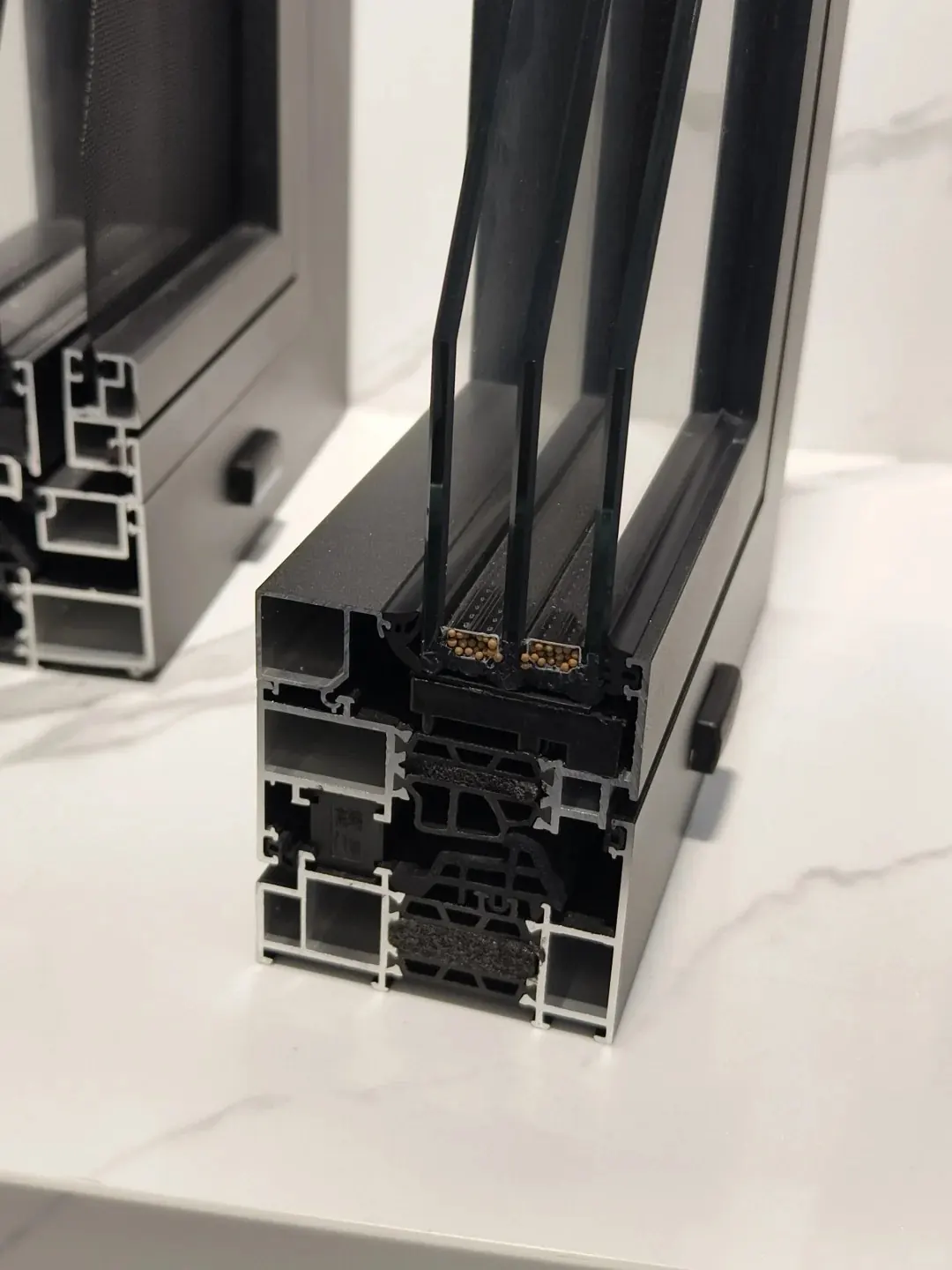
Aluminum is strong, durable, and easy to fabricate, but it also conducts heat efficiently. In a non-thermally broken frame, the interior and exterior aluminum sections may form a continuous path for heat transfer.
A thermal break profile separates the inner and outer aluminum sections with a lower-conductivity material. This reduces direct heat flow through the frame and may improve interior surface temperatures and condensation resistance.
However, a thermal break profile does not automatically make a window highly insulated, airtight, watertight, or acoustic. The glass usually occupies most of the window area, while opening joints and the perimeter installation joint can become major weak points.
“System window” is also not simply another name for a wider thermal break profile. A system window is generally developed around defined performance targets, with compatible profiles, glass, hardware, gaskets, drainage details, fabrication processes, and installation requirements.
Start With the Building, Not the Brand
Before requesting quotations, record the conditions that affect window selection:
- climate and city;
- floor level and façade orientation;
- exposure to wind, driving rain, salt air, or intense sunlight;
- nearby roads, railways, schools, or commercial noise;
- opening dimensions and preferred sightlines;
- property-management restrictions on color and opening direction;
- child safety, accessibility, cleaning, and maintenance requirements.
A roadside bedroom may prioritize airtightness and sound insulation. A rainy coastal project may prioritize watertightness, drainage, wind resistance, corrosion protection, and reliable anchoring. A cold-climate home may focus on whole-window U-value and condensation resistance.
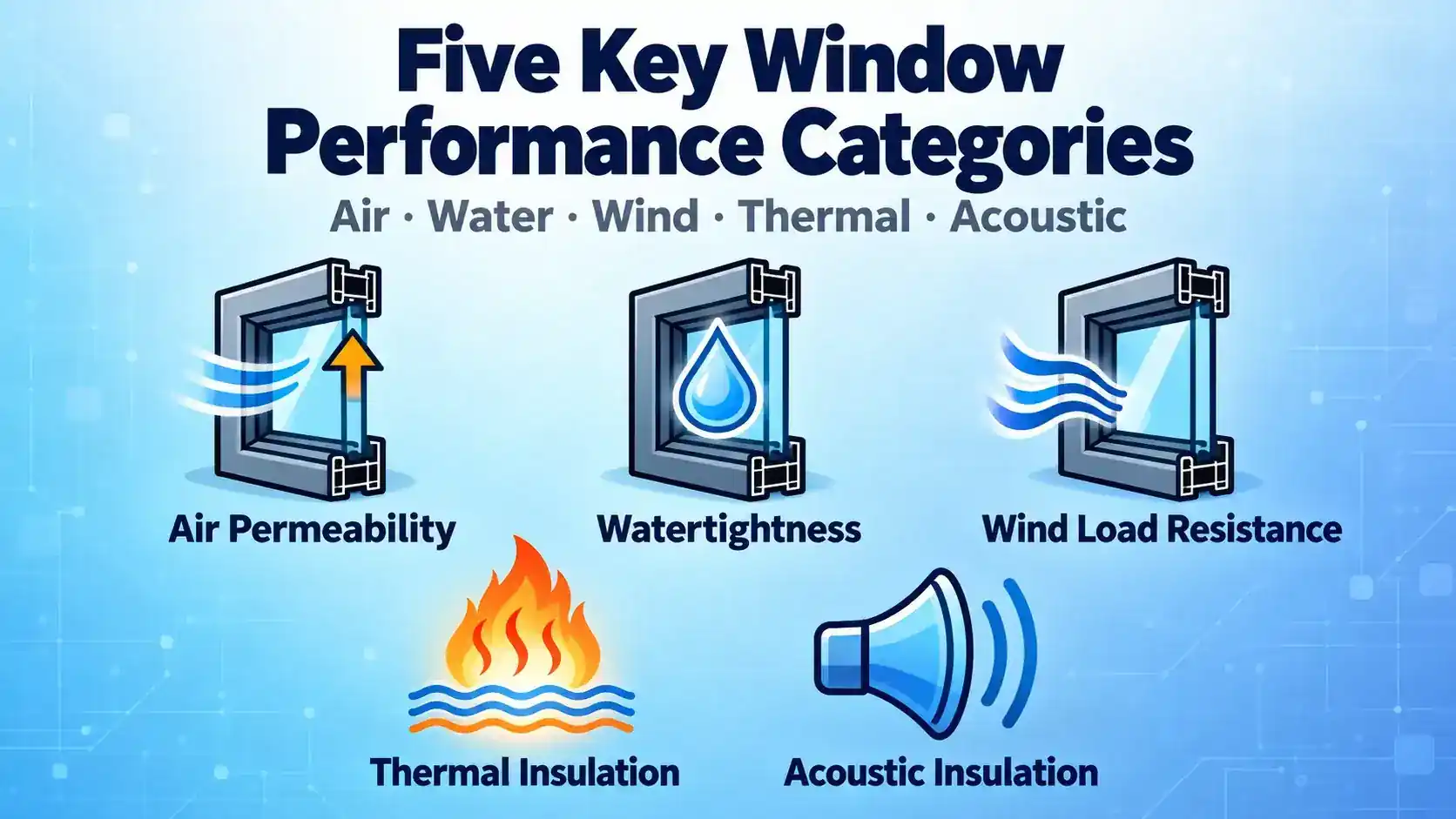
Understand the Five Main Window Performance Categories
Air Permeability
Air permeability describes how much air passes through a closed window under a pressure difference. It affects drafts, dust, energy use, and acoustic performance. The number of gaskets alone does not prove airtightness; look for a whole-window test based on the actual product configuration.
Watertightness
Watertightness describes resistance to rain penetration under pressure. Drainage chambers, corner sealing, sash compression, frame joints, and the wall interface all matter.
Wind Load Resistance
Wind resistance depends on window dimensions, mullions, profile geometry, glass, hardware, anchoring, and installation. Profile thickness alone cannot establish whether a large window is suitable for a high-wind location.
Thermal Performance
Whole-window thermal performance includes the frame, glass, spacer, edge effects, and their relative areas. Do not confuse the center-of-glass U-value with the U-value of the complete window.
Acoustic Performance
Sound insulation depends on glass composition, sash seals, frame design, and installation joints. A claim such as “reduces noise by 40 dB” has little value unless the test method, specimen, and configuration are identified.
What Should Be Included in a Window Specification?
A usable specification should identify:
- profile supplier, product series, cross-section, and relevant load-bearing wall thickness;
- thermal break material, dimensions, and supporting documentation;
- full glass build-up, including each pane, cavity, laminate, Low-E coating, and spacer;
- hardware brand, series, model, opening function, and load range;
- gaskets, corner sealants, and interior and exterior installation sealants;
- window divisions, opening direction, color, screens, and safety devices;
- demolition, transport, lifting, installation, waterproofing, finishing, and waste removal.
Descriptions such as “premium hardware,” “virgin aluminum,” or “double glazing” are too vague to inspect after delivery.
How to Review a Window Test Report
A profile report is not a whole-window report. Check the applicant, specimen name, dimensions, opening type, profile drawing, glass build-up, hardware, test standard, and date.
A result obtained from a small test specimen should not automatically be applied to a much larger window or a different configuration. Large or unusual assemblies may require project-specific structural and performance verification.
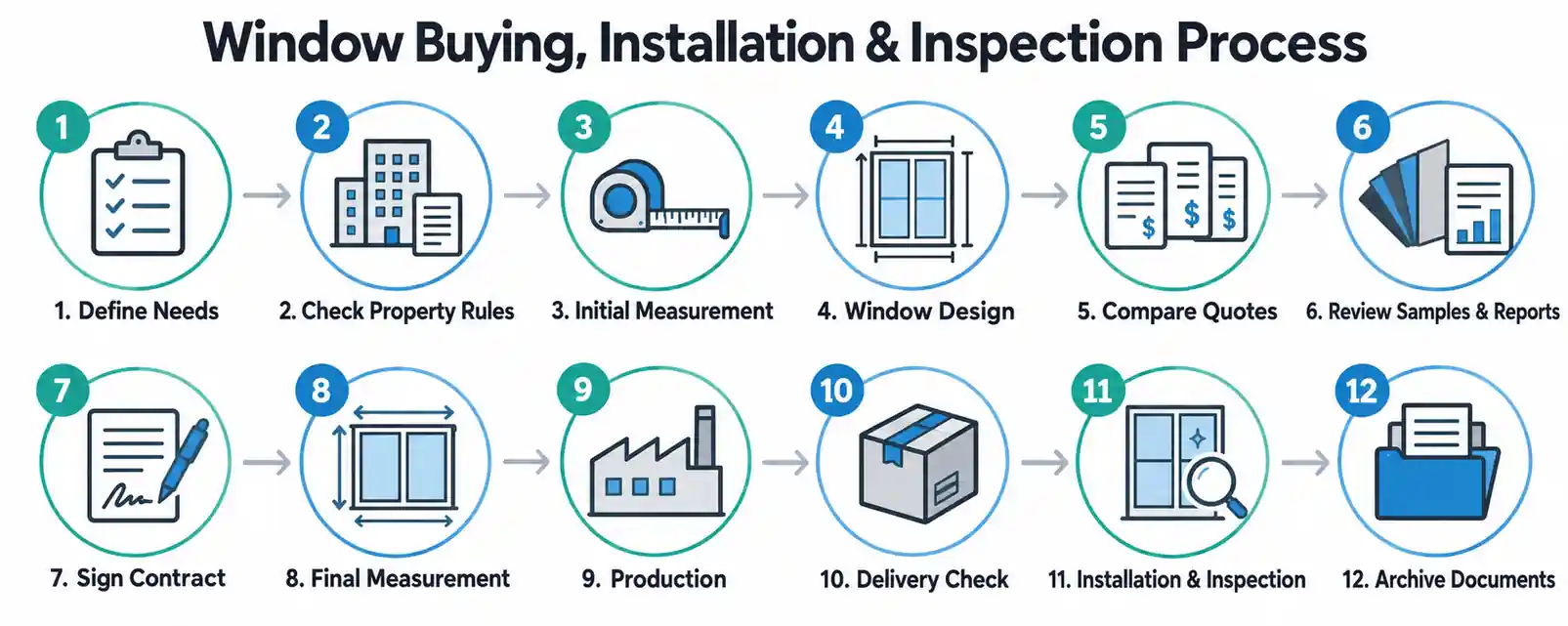
A Practical Buying Process
Use the following sequence:
Requirements → property approval → preliminary measurement → window layout → comparable quotations → sample and report review → contract → final measurement → production → delivery inspection → installation records → final inspection → document archive.
Photograph components on arrival and record hidden installation work, including anchors, perimeter filling, waterproofing, and sealant preparation.
Common Buying Mistakes
- comparing only profile series numbers;
- assuming thicker profiles or more chambers always mean better performance;
- comparing only the base price per square meter;
- accepting profile or glass reports as proof of complete-window performance;
- leaving installation materials and responsibility undefined.
Conclusion
The best thermal break aluminum window is not the one with the largest series number or the longest feature list. It is the product that matches the building, has a clear and verifiable specification, demonstrates suitable whole-window performance, and is installed under a defined responsibility and inspection process.
Suggested Internal Links:
- How to Evaluate a Foshan Window Manufacturer
- How to Choose Thermal Break Aluminum Profiles
- How to Choose Window Glass
- Casement vs Tilt-and-Turn vs Sliding Windows
- How to Choose Window Hardware, Gaskets, and Sealants
Technical References: Chinese standards GB/T 8478-2020, GB/T 31433-2015, GB/T 7106-2019, GB/T 8484-2020, and GB/T 8485-2008. Confirm the current status and project applicability before quoting specific requirements.
Turn your requirements into a comparable supplier brief
Share dimensions, quantities, performance targets and destination. We will organize the key inputs before factories and quotations are compared.