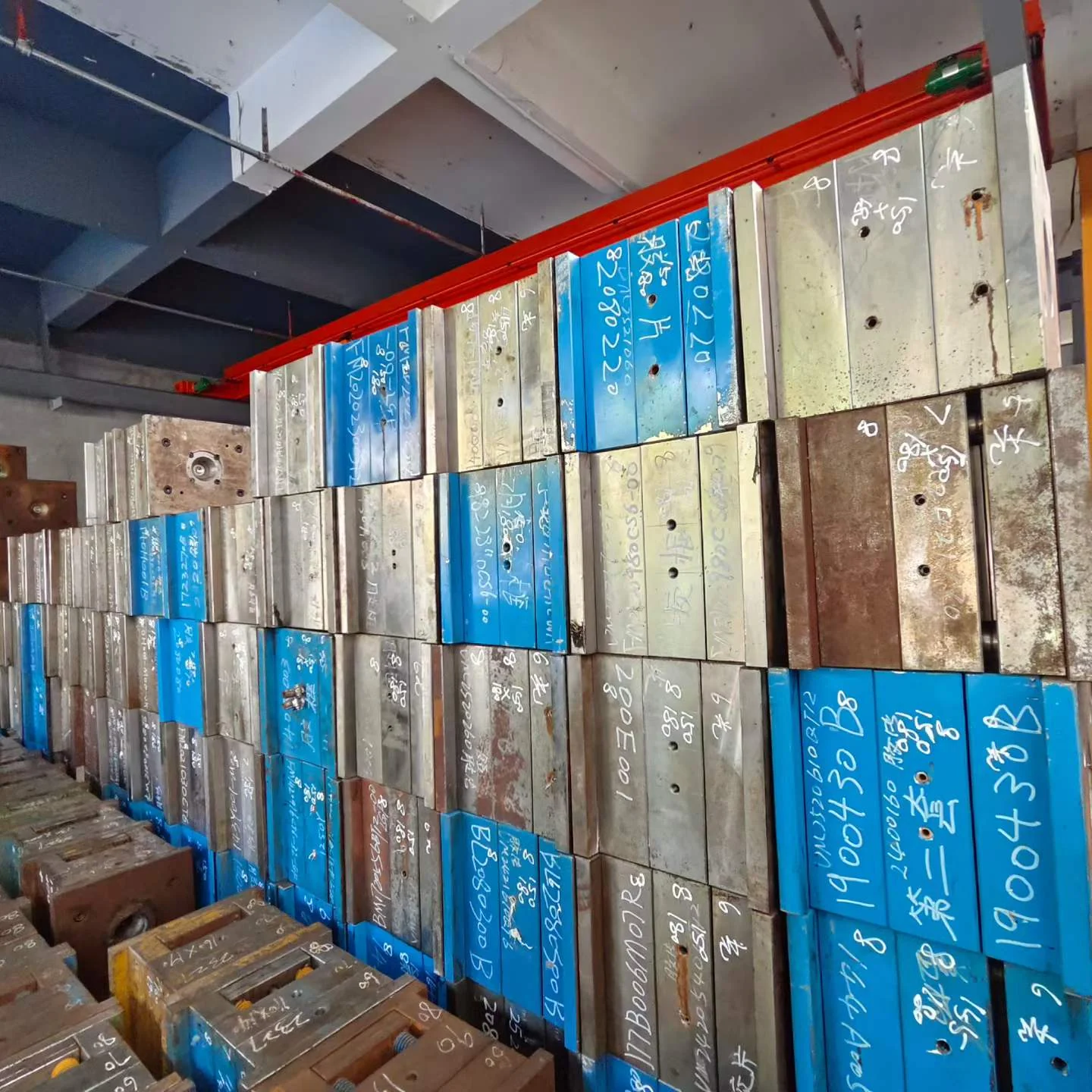
Buying a used injection mold can reduce the initial investment and shorten the launch time of a plastic product. It can also become an expensive mistake if the mold does not match the product, material or injection molding machine.
The central question is not simply, “Can we find a similar used mold?” It is:
Can this specific mold produce an acceptable part on the buyer’s machine, at the required output and quality, after all necessary repairs and modifications?
This guide explains what buyers should confirm before purchasing a used plastic injection mold from China, how to inspect a candidate mold, when modification is realistic, and when a new mold is the safer choice.
TL;DR: Quick Decision Rule
Consider a used mold only when all four conditions are met:
- The original molded part is close to your target product.
- The mold physically and technically matches your injection molding machine.
- The seller permits inspection and a documented mold trial.
- The total production-ready cost is clearly lower than a new mold quotation.
When to walk away: As a practical commercial screening rule—not a universal engineering law—reconsider the purchase when the combined cost of acquisition, repair, modification and re-trial approaches 50–60% of a comparable new mold quotation. A used mold still carries uncertain remaining life, incomplete records and a higher risk of additional work. For a simple, well-documented mold the calculation may differ, so compare total lifecycle cost rather than relying on the percentage alone.
What Is a Used Injection Mold?
The term “used mold” is applied to several very different assets. Before comparing quotations, buyers should confirm exactly what is included.
- Complete used injection mold: A previously operated mold that includes the mold base, core, cavity and operating mechanisms.
- Refurbished mold: A used mold that has been cleaned, repaired and tested. The scope of refurbishment can vary considerably.
- Modified mold: An existing mold changed to make a different part, weight, logo, interface or product version.
- Used mold base: The supporting mold frame is reused, while new core and cavity inserts may be manufactured.
- Incomplete or scrap mold: A mold that may be missing inserts, hot-runner parts, slides, ejector components or other essential items.
These categories should never be treated as interchangeable. A low price for an incomplete mold is not comparable with the price of a complete mold that has passed a production trial.
How an Injection Mold Is Constructed
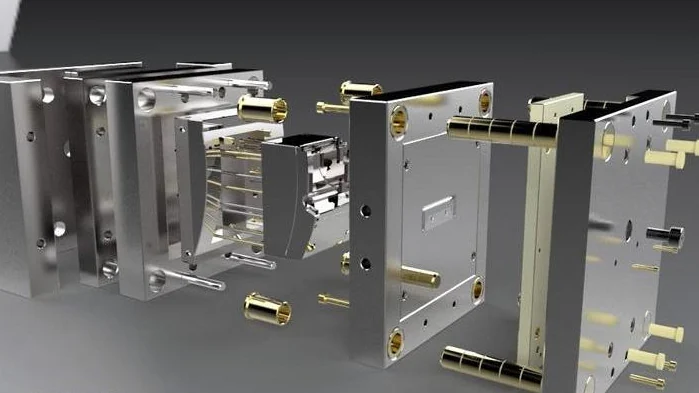
An injection mold is more than the visible core and cavity. It may include:
- mold base and plates;
- core, cavity and replaceable inserts;
- parting surfaces;
- sprue, gates and runner system;
- cold-runner or hot-runner components;
- ejector pins, sleeves and return mechanisms;
- slides, lifters and side-action mechanisms;
- guide pins and bushings;
- cooling channels and connectors;
- locating ring and sprue bushing.
Each system affects whether a mold can operate reliably. A good-looking cavity does not compensate for leaking cooling channels, a damaged hot runner or worn guiding components. For a general overview of mold construction and part-design considerations, see the 3D Systems injection molding basics guide.
Which Used Molds Are Easier to Find?
Used molds are most practical when the product is common, standardized and produced by many factories. Examples may include plastic household products, crates, baskets, buckets, flowerpots, stools, caps and some packaging components.
Product-specific molds are considerably harder to source. Stationery parts, branded housings, automotive components, medical products and parts with a unique assembly interface are less likely to match a new buyer’s requirements.
Our recent sourcing experience illustrates the difference. We contacted 11 used-mold dealers about a stationery mold. Only one dealer reported having recently received a 12-cavity pencil-sharpener housing mold. Their consistent feedback was that household-product molds are common, while molds for a particular stationery item are rare.
This does not mean a rare mold cannot be found. It means the buyer should compare the cost of waiting against the cost of modifying an available mold or manufacturing new inserts.
Information Required Before Starting a Search
Searching without complete product and machine information creates false matches and unreliable quotations. A buyer should prepare the following information.
Product information
- physical sample, clear photographs, or both;
- 2D drawing with tolerances;
- 3D file in STEP, IGES, X_T or another usable format;
- plastic material and exact grade;
- part dimensions, weight and wall thickness;
- surface finish, texture and color requirements;
- critical assembly dimensions;
- required number of cavities;
- expected annual production volume;
- acceptable cycle time and mold-life expectations.
Injection molding machine information
- machine brand and model;
- clamping force;
- shot capacity and screw diameter;
- tie-bar spacing;
- minimum and maximum mold thickness;
- opening stroke and daylight;
- ejector position and stroke;
- locating-ring diameter;
- nozzle radius and nozzle opening;
- hot-runner voltage and controller information.
The machine model alone is not enough. Two machines with the same nominal clamping force may have different tie-bar spacing, platen layouts, shot capacity or control interfaces.
Why Similar-Looking Products May Need Different Molds
Two plastic parts can look almost identical and still require different molding conditions or tooling dimensions.
Material and shrinkage
PP, PE, ABS, PET and other plastics shrink differently during cooling. Filled grades can also behave differently from unfilled grades. Changing the material without evaluating shrinkage can move critical dimensions outside tolerance or introduce warpage.
Part weight and wall thickness
A change in part weight is not merely an adjustment to the injection machine. It may require changes to the core, cavity, gate, runner, cooling and ejection design. Removing steel is generally easier than adding it back, while welding a molding surface can affect appearance, hardness and future durability.
Product interfaces and appearance
Threads, snap fits, sealing surfaces, inserts, logos and textures must match the target product. Some logos or date marks can be changed with replaceable inserts. A different thread or sealing geometry may require much more extensive work.
This is particularly important for PET preform molds. A “30 mm neck” is not just one diameter: the complete neck finish may include the thread profile, sealing surface, support ring, tamper-band geometry and height. Preform weight, neck drawing, cavity count and machine interface must all be confirmed.
How to Match a Used Mold to an Injection Molding Machine
Machine compatibility should be checked before negotiating the purchase price.
Physical fit
Confirm that the mold can pass between the tie bars and be mounted on the platens. Check mold thickness, locating ring, bolt or clamp positions, nozzle alignment and the space required for slides, cylinders and external connections.
Shot capacity
The required shot includes all molded parts plus the sprue and runner. The machine must have sufficient plasticizing and injection capacity without operating at an unsuitable extreme of its range.
Clamping requirement
The required clamping force depends on the projected molding area and the pressure acting on it. A high-cavity mold can require substantially more clamping force than a single-cavity mold producing the same part.
Opening and ejection
The machine must provide enough opening stroke to release the product and runner. The ejector system must align and travel far enough to operate the mold safely.
Hot-runner compatibility
Confirm heater voltage, thermocouple type, zone count, connectors and controller compatibility. Hot-runner condition is especially important in a used mold because replacement parts can materially change the final cost. Technical introductions from Husky and Mold-Masters explain the role of hot-runner systems.
Used Injection Mold Inspection Checklist
A mold should be screened with photographs first, physically inspected when practical, and tested on a machine before final acceptance whenever possible.
Five red flags that justify immediate rejection
Reject the mold—or stop the transaction until an independent mold maker proves otherwise—if you find any of the following:
- Major cavity deformation or cracked steel: The product-forming geometry or structural integrity is already compromised.
- Deep or extensive welding on a critical cosmetic, sealing or high-pressure surface: Further repair may affect hardness, appearance, dimensions and service life.
- Cooling circuits that cannot be opened, pressure-tested or restored: Poor cooling can cause unstable dimensions, long cycles and local overheating.
- Missing critical slides, lifters, core pulls, hot-runner parts or proprietary components: Replacement may cost more than the apparent saving.
- No verifiable machine fit and no permission to conduct a mold trial: The buyer is being asked to accept both compatibility risk and production risk at the same time.
A red flag does not always mean that repair is physically impossible. It means the mold should not be priced or purchased as a production-ready asset.
1. Identification and records
Request photographs of the nameplate and mold number. Ask for:
- original product samples;
- drawings and bill of materials, if available;
- mold-steel information;
- maintenance and repair history;
- hot-runner documentation;
- previous machine information;
- estimated production cycles.
Production history is often incomplete. Treat an unsupported cycle estimate as a seller’s statement, not a verified fact.
2. Core, cavity and inserts
Inspect molding surfaces for:
- corrosion and pitting;
- scratches and scoring;
- chipped edges;
- polishing damage;
- dimensional wear;
- visible weld repairs;
- damaged texture;
- mismatched or missing inserts.
Previously welded steel is not automatically unacceptable. The location, welding method, steel grade, heat treatment and required surface finish determine the risk.
3. Parting surface
Look for dents, rolled edges, corrosion and previous welding on the shut-off and parting surfaces. Damage in these areas can allow material to escape and create flash. Xometry’s overview of common injection molding defects provides useful background on defect causes, although the condition of a specific mold must be confirmed by trial.
4. Ejection and side actions
Manually inspect ejector pins, sleeves, slides, lifters, return pins and hydraulic mechanisms. They should move consistently without excessive clearance, binding or abnormal marks. Confirm that no components are missing.
5. Cooling circuits
Cooling channels should be pressure- and flow-tested. A channel may appear normal at the connector while being partially blocked by rust or scale. Check every independent circuit for leakage, restriction and cross-connection.
6. Hot-runner system
Measure heater and thermocouple circuits, confirm zone identification, and inspect wiring and connectors. If the mold has valve gates, check the actuation and nozzle condition. A balanced hot-runner system contributes to consistent cavity filling, as discussed in Husky’s material on hot-runner system balance.
7. Mold base and guiding system
Check plate condition, parallelism, guide pins, bushings, support pillars, fasteners and lifting points. Rust on an external plate may be repairable; deformation or severe damage to alignment features is more serious.
Why a Mold Trial Is Essential
Photographs can reveal rust, missing parts and obvious damage. They cannot prove that all cavities fill evenly, the cooling system performs correctly or the finished part meets dimensional requirements.
A useful mold trial records:
- injection molding machine and screw size;
- material and material grade;
- drying conditions, where applicable;
- barrel and mold temperatures;
- injection speed and pressure;
- holding pressure and time;
- cooling time and total cycle time;
- part weight by cavity;
- observed defects and dimensional results.
Trial samples should be identified by cavity. Inspect them for short shots, flash, sink marks, burn marks, weld lines, deformation, ejection marks, scratches, gate problems and dimensional variation. A structured acceptance process is preferable to approving a mold from one attractive sample; this English-language mold acceptance guide gives an example of the items commonly reviewed.
If the seller cannot conduct a trial, the buyer should price the mold as a higher-risk asset and consider an independent inspection, resistance testing, water-circuit testing and a contract that clearly defines the condition being purchased.
Can a Used Mold Be Modified?
Many used molds can be modified, but “modifiable” does not necessarily mean “economical.” A proper assessment normally requires disassembly, cleaning, measurement and review by an experienced mold maker.
Possible modifications include:
- replacing product or logo inserts;
- adjusting limited dimensions where steel conditions permit;
- repairing worn shut-offs;
- replacing ejector or guiding components;
- repairing cooling connections;
- replacing hot-runner components;
- manufacturing new core and cavity inserts in an existing mold base.
Modification becomes less attractive when the target part requires major changes to product geometry, gate location, cooling circuits, side actions or cavity layout. Welding large areas of a critical molding surface can also create quality and durability concerns.
Reusing the mold base while manufacturing new core and cavity inserts can be a useful middle option. It may preserve plates, guiding elements and some standard components, while giving the buyer new product-forming surfaces. Before choosing this route, the mold base must be measured and checked for alignment, wear, deformation and machine compatibility.
Used Mold, Modified Mold or New Mold?
| Option | Initial cost | Lead time | Technical risk | Best suited to |
|---|---|---|---|---|
| Use the existing mold without changes | Lowest | Shortest | High unless the match is exact | Standard products with confirmed samples and machine fit |
| Repair or refurbish a used mold | Low to medium | Short to medium | Depends on wear and missing records | Matching products with repairable condition issues |
| Modify a used mold | Medium | Medium | Depends on modification scope | Products close to the original geometry |
| Reuse mold base and make new inserts | Medium | Medium | More controllable than extensive cavity welding | Suitable mold base with different product-forming geometry |
| Build a new mold | Highest | Longest | Usually the most controllable | Long-term production, strict tolerances or unique products |
There is no universal percentage at which modification should automatically be rejected. The decision should compare total landed and production-ready cost—not only the purchase price.
Hidden Costs in a Cheap Used Mold
The total project cost may include:
- mold purchase;
- inspection and dimensional measurement;
- disassembly and cleaning;
- replacement steel and components;
- hot-runner repair;
- cooling-channel cleaning or repair;
- design and machining for modification;
- trial material and machine time;
- repeated sampling and dimensional inspection;
- transport between the dealer, repair shop and trial factory;
- export packaging and freight;
- production delay if the first modification fails.
The cost of a mold is affected by its complexity, steel, cavity count, hot runner, machining and validation requirements. A general breakdown is available in this English discussion of injection mold cost composition, but a used mold still requires an asset-specific assessment.
Where Used Molds Are Sourced in China
China’s mold supply chain includes mold manufacturers, injection molding factories, repair workshops, used-equipment dealers and companies that purchase idle industrial assets. These businesses perform different roles.
- A used-mold dealer may have access to inventory but no engineering or trial capability.
- A mold maker can assess steel and structure, but may not own used inventory.
- A repair and modification workshop may be the most important party when the mold is incomplete or requires adaptation.
- An injection molding factory can conduct a trial and provide process information.
Sourcing commonly overlaps with manufacturing clusters such as Taizhou/Huangyan and Ningbo in Zhejiang, Dongguan and Shenzhen in Guangdong, and Suzhou/Kunshan in Jiangsu. However, the location alone does not prove capability. Buyers should verify who owns the mold, where it is stored, who will perform the repair and where the trial will be conducted.
Intellectual Property and Ownership Checks
A used mold may contain a brand logo, patented appearance or geometry developed for another customer. Before export or production, confirm:
- that the seller has the right to dispose of the mold;
- whether customer-owned markings must be removed;
- whether the target product may conflict with design patents, trademarks or other rights;
- whether drawings and samples can legally be transferred.
This is a commercial and legal check, not merely a tooling issue. The World Intellectual Property Organization’s industrial-design resources provide general background, but a specific product should be reviewed by qualified counsel when the risk is material.
HS Classification and Customs Clearance
Injection or compression molds for rubber or plastics are commonly considered under HS 8480.71, while mold bases are listed separately under HS 8480.20. These headings are a starting point, not a final customs ruling. National tariff extensions, duty rates, valuation rules and documentation requirements vary by destination and can change.
Before accepting the order, ask the buyer’s licensed customs broker to confirm:
- the complete destination-country tariff code;
- whether the item should be declared as a complete mold, mold base, parts or tooling;
- whether used industrial goods require inspection, refurbishment certification, valuation evidence or an import authorization;
- required country-of-origin, packing, cleaning and fumigation documentation;
- whether controllers, heaters and spare components require separate classification.
For example, the United States International Trade Commission tariff search shows national subdivisions under 8480.71. Other countries may apply different suffixes and controls. Do not promise duty rates or clearance eligibility until the destination-country broker has reviewed the exact shipment.
Payment Protection and Contract Terms
A low purchase price provides little protection if the mold cannot pass a trial. The purchase contract should identify the mold number, included components, known repairs, modification scope, machine interface, trial conditions, sample standard, delivery terms and remedies for non-conformity.
For a modified or refurbished mold, consider a staged payment structure. One practical approach is to retain 10–20% of the contract value until the mold has completed its agreed trial in China and the buyer has approved the dimensional results from the T1 samples or First Article Inspection report. The exact percentage should be negotiated according to project value, supplier leverage and the available payment or escrow mechanism.
Payment protection may include:
- milestone payments tied to inspection, modification and trial completion;
- a written T1/FAI acceptance standard;
- cavity-identified samples and dimensional reports;
- photo or video evidence linked to the mold number;
- third-party inspection where appropriate;
- escrow or another mutually accepted controlled-release method;
- a clear rule for rework, rejection, refund or replacement.
Do not release the final balance merely because the mold runs. “Runs successfully” should mean it operates under the agreed process window and produces samples that meet the documented acceptance criteria.
Packaging and Delivery
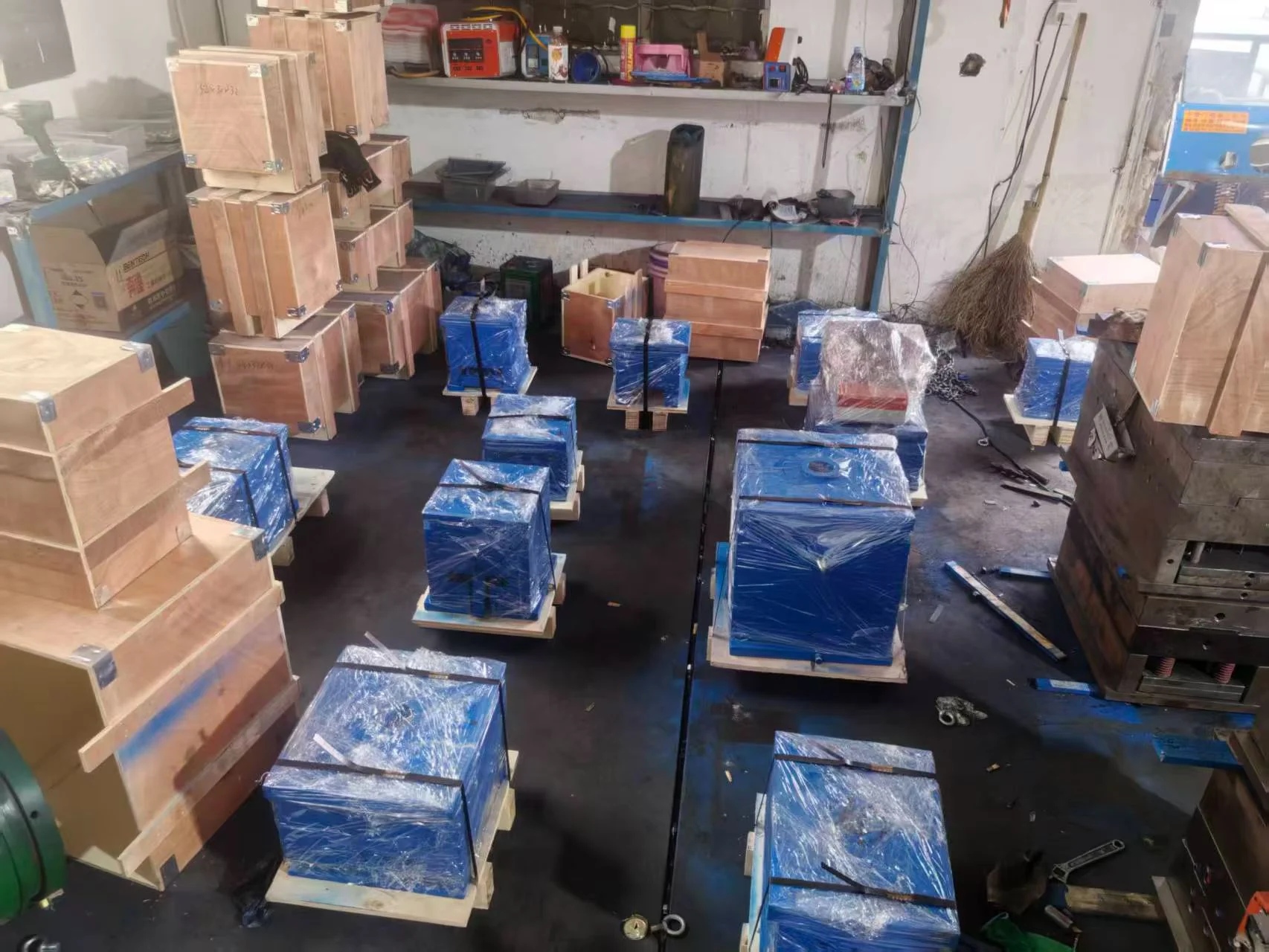
Before shipping, the mold should be cleaned, dried and protected against corrosion. Moving components should be secured, openings protected and lifting points identified. Mold-protection products must be removed correctly before molding; Chem-Trend provides general guidance on removing mold protectant.
The delivery package should identify:
- net and gross weight;
- packed dimensions;
- lifting and center-of-gravity information;
- included controller, cables and spare parts;
- drawings and test records;
- approved samples;
- rust-prevention and storage instructions.
A Safer Used-Mold Sourcing Process
The following sequence reduces avoidable surprises:
- Confirm the product drawing, material, weight, tolerance and annual quantity.
- Collect the complete injection molding machine specification.
- Search for available molds and request standardized photographs and records.
- Compare the original molded product with the target product.
- Check physical and technical compatibility with the buyer’s machine.
- Ask a mold maker to assess repair and modification feasibility.
- Inspect the mold and test cooling, electrical and mechanical systems.
- Conduct a documented mold trial.
- Approve cavity-identified samples and critical dimensions.
- Complete agreed repairs or modifications.
- Repeat the trial and issue a final acceptance record.
- Apply rust protection, secure the mold and prepare export packaging.
Questions to Ask a Used Mold Supplier
- Do you own the mold, or are you acting as an intermediary?
- Where is the mold currently stored?
- What product and material did it previously run?
- Is the original sample available?
- Can you provide the mold dimensions, weight and cavity count?
- Is the mold complete?
- Has the core or cavity been welded or repaired?
- Is the hot runner complete and testable?
- Have all cooling circuits been pressure- and flow-tested?
- Can the mold be trialed before shipment?
- Which machine was previously used?
- Which repairs and modifications are included in the quotation?
- What acceptance criteria and after-sales support are offered?
Frequently Asked Questions
Are used injection molds always cheaper than new molds?
No. A used mold can be economical when it closely matches the target product and machine. Extensive repair, hot-runner replacement, repeated trials or major modification can remove the initial saving.
Can a used injection mold be installed on any injection molding machine?
No. Tie-bar spacing, mold thickness, shot capacity, clamping force, opening stroke, ejector layout, locating ring, nozzle and hot-runner controls must be checked.
Can PP and PE products use the same mold?
Sometimes, but not automatically. Material shrinkage, flow, cooling, part dimensions and required performance must be evaluated. A trial is necessary before production approval.
How can buyers confirm the remaining life of a used mold?
Exact remaining life is difficult to prove without reliable production and maintenance records. Steel condition, dimensional wear, guiding accuracy, mechanism condition and trial performance provide better evidence than appearance alone.
Is a trial necessary before buying a used mold?
It is strongly recommended. A trial verifies filling, ejection, cooling, cavity balance, cycle stability and product quality in ways that photographs cannot.
What if a complete matching used mold cannot be found?
The alternatives are to modify a close mold, reuse a suitable mold base with new core and cavity inserts, or manufacture a new mold. The best option depends on total cost, lead time, production volume and quality risk.
Request a Used Mold Assessment
To evaluate whether a used injection mold can meet your project requirements, provide:
- product photographs, sample and 2D/3D drawings;
- plastic material and grade;
- part dimensions, weight and tolerances;
- required cavities and annual output;
- injection molding machine model and full specifications;
- target delivery date and destination country;
- whether repair, modification or reuse of a mold base is acceptable.
With this information, a sourcing team can distinguish a genuinely suitable mold from an inexpensive asset that may never become production-ready.
Send the product, mold and machine information.
Share the part drawing or sample, material, target output, available mold details and injection-machine specifications. We will identify the checks needed before purchase, modification or trial.